Last updated: November 5, 2026
You hear the diagnosis, and it sounds final. Then, months later, the scan comes back clear and no one can explain why. Or maybe it’s smaller: you think of an old friend out of nowhere, and they call you ten minutes later. Something in you wants to call it luck. Something else insists it was more than that.
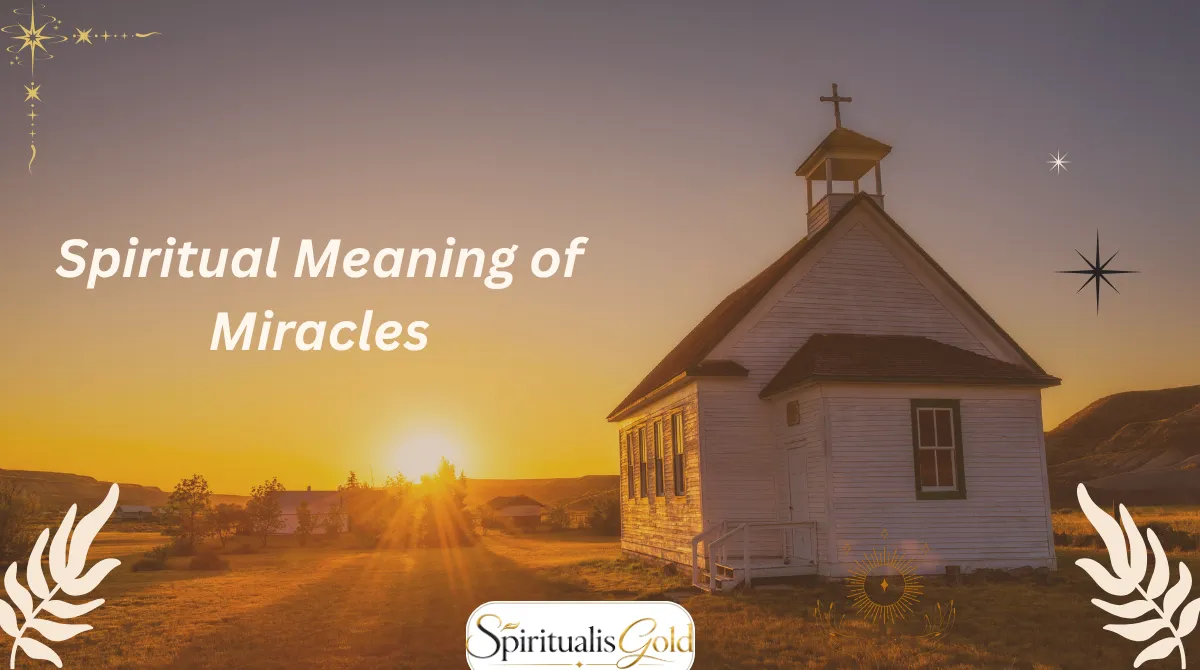
Here’s the direct answer. The spiritual meaning of miracles centers on one idea across nearly every tradition: a miracle is a moment when something greater than ordinary cause and effect reaches into your life, often at the exact point you needed it most. It’s read as proof that you are seen, that help is available beyond what effort or logic can explain, and that grace sometimes arrives uninvited.
That doesn’t mean every unexplained event is divine, and a good article on this topic should say so plainly. Below, we’ll walk through what different faiths believe a miracle actually is, the difference between an everyday miracle and an extraordinary one, where coincidence ends and something deeper might begin, and what to actually do the next time one happens to you.
The Quick Answer: What a Miracle Means Spiritually
A miracle, in spiritual terms, is an event that breaks the pattern you’d normally expect, in a way that feels meaningful rather than random. Three ideas show up again and again across traditions:
- Something greater than you intervened, whether you call that God, the universe, or a higher order of things
- You are not facing your life alone, even when it felt that way right before it happened
- Grace exists, meaning good things can arrive that you didn’t earn and couldn’t have forced
None of this is offered as scientific proof. It’s a framework that millions of people use to make sense of moments that logic alone doesn’t fully cover.
Why Humans Call Something a Miracle in the First Place
People have been naming unexplainable good fortune as “miraculous” for thousands of years, long before anyone had the language of statistics or probability. A storm passes just before the harvest. A child survives an illness that should have killed them. The pattern repeats across cultures with no shared origin point, which is part of why the idea feels so persistent.
Most traditions draw a line between an ordinary blessing and a true miracle. A blessing might be a good job or a kind friend. A miracle usually involves something that shouldn’t have happened at all given the circumstances, yet did.
6 Spiritual Meanings Behind a Miracle
Here are the interpretations that come up most often when people try to make sense of their own experience.
1. Confirmation That You’re Not Facing Life Alone
This is the meaning people reach for first, especially after a frightening event. A miracle often lands as proof that some force larger than your own effort stepped in on your behalf. You didn’t fix the outcome through willpower alone, and that fact tends to stay with people long after the event itself fades.
2. An Answer to a Prayer or a Need You Didn’t Fully Voice
Many people describe their miracle as arriving right after they prayed, or right after they silently gave up and stopped trying to control the outcome. The timing feels too specific to dismiss. A lot of readers tell me the moment they stopped forcing a solution is exactly when the real one showed up.
3. A Sign to Deepen Trust, Not Just Gratitude
Beyond thankfulness, some traditions read a miracle as an invitation. It’s less “be grateful this one time” and more “trust that this kind of support is available again.” The miracle becomes evidence you’re meant to carry forward, not a one-time gift to admire and move past.
4. A Wake-Up Call to Pay Closer Attention
If the miracle arrives during a period when you’ve been distracted, numb, or going through the motions, it can function as a jolt. It pulls your attention back to what actually matters: the people around you, the fragility of your own health, the things you’d been taking for granted.
5. Evidence of Grace Rather Than Something Earned
This meaning matters because it corrects a common misunderstanding. Miracles are rarely framed as a reward for good behavior. Most traditions are careful to separate “I deserved this” from “I received this.” A miracle, by definition, isn’t something you earned through merit. It’s given freely.
6. A Shift in How You See What’s Possible
Once someone experiences a genuine miracle, their sense of what’s possible tends to widen. People who go through this often describe feeling less locked into fear about future problems, simply because they now have firsthand proof that outcomes don’t always follow the rules they assumed were fixed.
What Different Faith Traditions Say About Miracles

Miracles aren’t owned by one belief system, and the differences between traditions are worth knowing.
Christianity treats miracles as direct acts of God that reveal divine power and compassion, from healing stories in scripture to modern accounts tied to places like Lourdes, where pilgrims report unexplained recoveries.
Judaism often frames miracles on a spectrum, from the dramatic (the parting of a sea) to the quiet, ongoing wonder of nature itself continuing to function. Many Jewish teachings hold that recognizing the quieter kind takes more spiritual maturity than noticing the dramatic kind.
Islam describes miracles as signs, or ayat, granted through prophets to confirm divine truth, with the emphasis placed on the message behind the sign rather than the spectacle of the event.
Hindu and Buddhist traditions generally place less weight on miracles as proof of anything, focusing instead on inner awakening. When unusual events do occur, they’re often treated as side effects of deep spiritual practice rather than the goal itself.
Modern spirituality and energy-based teachings tend to describe miracles as shifts in perception, the idea that nothing physically changed except your awareness of what was already true. This framing shows up often in self-development and mindfulness spaces.
Everyday Miracles vs. Extraordinary Miracles
Not every miracle involves a hospital room or a natural disaster narrowly avoided. Many people experience what’s often called an “everyday miracle,” something small enough to overlook but still meaningful.
Everyday miracles might look like:
- A stranger’s kindness that arrives at the exact moment you needed it
- Finding the money for a bill right when you thought you couldn’t
- A “coincidental” meeting that changes the direction of your week
Extraordinary miracles tend to involve:
- Medical recoveries doctors can’t fully explain
- Surviving a situation that statistically should have gone differently
- A sudden, complete shift in a long-standing crisis with no clear cause
Both categories matter. Treating only the dramatic version as “real” causes a lot of people to miss the smaller ones happening around them regularly.
Is There a Line Between a Miracle and a Coincidence?
This question deserves an honest answer, not a dodge. Psychologists point out that human brains are wired to notice patterns and assign meaning, sometimes where none exists. This is well documented and worth taking seriously. A coincidence that happens during a stressful week can feel loaded with significance simply because you’re paying closer attention than usual.
That said, meaning and mechanism aren’t always competing explanations. You can accept that an event has a plausible physical cause and still choose to receive it as significant. Holding both at once, the explanation and the meaning, isn’t contradictory. It’s simply how most people who believe in miracles actually process them.
How to Recognize a Miracle When It Happens
A few patterns tend to show up in genuine miracle accounts, regardless of faith background.
- The timing feels impossibly precise. Not just good luck, but good luck landing at the one moment it mattered most.
- It carries an emotional weight that outlasts the event. People often remember the feeling years later, not just the facts.
- There’s an element that resists a tidy explanation. Not everything about it lines up cleanly with ordinary cause and effect.
- It feels personal, not generic. The event connects to something specific you were struggling with, not a vague positive outcome.
What To Do When You Experience One
If something happens that feels like a miracle, here’s a simple way to actually work with it instead of just marveling at it and moving on.
- Pause before you explain it away. Give yourself permission to sit with the moment before your logical mind tries to flatten it into something ordinary.
- Write it down the same day. Memory softens details quickly, and the specifics often matter more later than they seem to at the time.
- Say thank you, even if you’re unsure to whom. Gratitude doesn’t require certainty about the source.
- Let it change one small habit. A miracle that doesn’t shift anything in how you live tends to fade into a nice story instead of a turning point.
- Share it carefully. Not everyone will receive it the way you hope, and that’s fine. The meaning belongs to you first.
A Quick Note on “Manifesting” Miracles
Some modern teachings blur the line between a miracle and manifestation, the idea that focused intention can summon a specific outcome. It’s worth keeping these separate. A miracle, in most traditional frameworks, is defined by the fact that you couldn’t force it through effort or intention alone. The moment you can engineer an outcome through willpower, it stops functioning as a miracle in the traditional sense and starts functioning as a goal you achieved. Both have value. They’re just not the same thing.
What Is the Hebrew Meaning of Miracle?
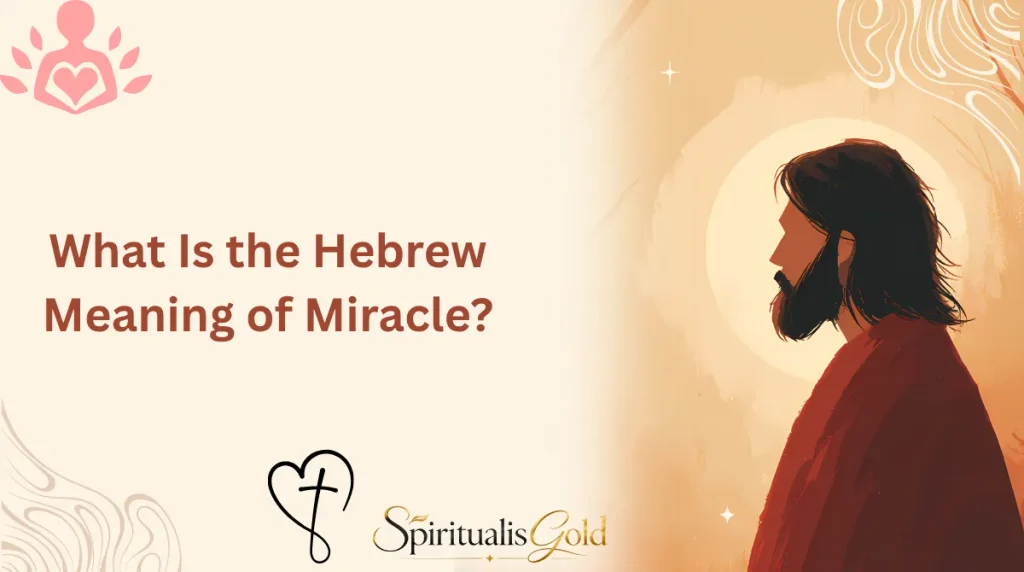
The Hebrew meaning of miracle is closely connected to the idea of a sign, wonder, or extraordinary act that reveals God’s power. In the Old Testament, one of the Hebrew words commonly translated as miracle is mopheth (מוֹפֵת), which refers to a wonder or remarkable sign that attracts attention and communicates a deeper message. Another important Hebrew word is nes (נֵס), which can refer to a banner or standard and is sometimes associated with a sign or signal.
The Hebrew word ot (אוֹת), meaning sign or mark, is also important when understanding miracles in the Bible. These words show that miracles were not simply unusual events. They often carried spiritual meaning and demonstrated God’s presence, authority, and purpose.
One powerful example is the story of Moses and the Israelites in Egypt. God performed extraordinary signs through Moses, including turning the Nile into blood and sending other plagues upon Egypt. These events revealed God’s authority and prepared the way for the Israelites’ freedom from slavery.
Another remarkable example is the parting of the Red Sea in Exodus 14. When the Israelites appeared trapped between the Egyptian army and the sea, God made a way for them to cross safely. This event demonstrated divine protection and gave the people a reason to trust Him.
From a biblical Hebrew perspective, a miracle is therefore more than something surprising or impossible to explain. It can be understood as an extraordinary sign that points beyond the event itself and encourages people to recognize God’s power, faithfulness, and involvement in human life.
Miracle Definition for a Child
A miracle is something wonderful and amazing that happens and makes people feel surprised, thankful, or hopeful. It is something that seems impossible or very unlikely but happens in a special way. Many people believe miracles are gifts from God that show His love, kindness, and power.
For example, imagine someone who is very sick and slowly becomes healthy again. Their family may feel that this recovery is a miracle because they were worried and prayed for a better outcome. Another example could be a family finding help when they have no food or money. The kindness of another person may feel like a miracle because it arrives exactly when they need it.
Miracles do not always have to involve something dramatic. Sometimes, a person may consider being reunited with a loved one, finding hope after a difficult experience, or receiving unexpected help a miracle.
In simple words, a miracle is a wonderful event that reminds us that hope, love, and goodness can appear even when things seem impossible.
What Is the Full Meaning of Miracle?
The full meaning of miracle goes beyond an unusual or unexpected event. A miracle is generally understood as an extraordinary occurrence that brings wonder, hope, or amazement, particularly when people believe it involves divine power or intervention. In religious traditions, miracles are often seen as signs of God’s presence and a reminder that human understanding does not explain everything.
The word miracle comes from the Latin word miraculum, which means something wonderful or an object of wonder. It is connected to the Latin verb mirari, meaning to wonder or marvel. This origin helps explain why miracles are associated with events that leave people amazed.
In Christianity, miracles have a special connection with God’s power and purpose. The Bible describes miracles involving healing, protection, provision, and even raising the dead. These events often strengthened people’s faith and revealed something important about God’s character.
However, the meaning of miracle can also be understood in everyday life. Someone who survives a serious accident, overcomes an overwhelming challenge, or receives unexpected help may describe the experience as miraculous. Such moments can create deep gratitude and remind people not to lose hope.
A miracle can therefore have both a religious and personal meaning. For some, it is direct evidence of God’s intervention. For others, it describes an extraordinary event that brings happiness or changes someone’s life in an unexpected way. At its heart, the word miracle expresses wonder, gratitude, and the possibility of something beautiful happening when it seems least expected.
Miracle Definition in Simple Words
In simple words, a miracle is an extraordinary or wonderful event that seems impossible or highly unlikely to happen. It is something that surprises people and often gives them a reason to feel grateful, hopeful, or amazed.
For religious believers, a miracle is commonly understood as an act of God that shows His power and love. For example, someone recovering from a life-threatening illness or receiving unexpected help during a difficult time may describe the experience as a miracle.
The word can also be used outside religion. A person might say that finding a lost item after years was a miracle or that a difficult situation was resolved in an almost unbelievable way.
The important difference is that not every surprising event is necessarily considered a miracle in the religious sense. A biblical miracle usually has a deeper spiritual purpose and points toward God’s power or message.
In everyday conversation, however, people often use the word to express amazement at something wonderful. Simply put, a miracle is something extraordinary that fills people with wonder and reminds them that life can bring unexpected blessings.
What Does Miracle Person Mean?
A miracle person is an expression used to describe someone whose life, recovery, achievements, or presence seems extraordinary. It may refer to a person who has overcome enormous difficulties, survived an experience that seemed impossible to survive, or brought unexpected happiness into the lives of others.
For example, a child who survives a serious medical condition may be lovingly described by their family as a miracle child. Similarly, someone who has faced years of hardship but continues to show courage, kindness, and hope may be called a miracle person.
The expression can also describe someone who makes a positive difference in other people’s lives. A person who offers support during a painful period, helps someone rebuild their confidence, or provides kindness when it is needed most can feel like a blessing.
From a spiritual perspective, some people believe that certain individuals enter their lives for a meaningful reason. They may describe these people as miracles because their presence brings comfort, encouragement, healing, or renewed faith.
However, calling someone a miracle person does not mean that they are perfect or possess supernatural powers. It is usually an expression of love, appreciation, and gratitude. It recognizes that a person’s life or presence can be an extraordinary gift.
Miracle Definition According to Merriam-Webster
According to the general dictionary meaning given by Merriam-Webster, a miracle is an extraordinary event that demonstrates divine intervention in human affairs. The word can also describe an unusual or wonderful occurrence that seems to go beyond ordinary expectations.
This definition highlights two important aspects of a miracle. The first is its religious meaning, where an event is understood as an act of God or a supernatural power. The second is its everyday meaning, where people use the word to describe something remarkably good or unexpected.
For example, a sudden recovery from a serious illness may be described as a miracle by someone who believes God answered their prayers. Similarly, a person might call an unexpected opportunity a miracle because it changed their life when they had almost given up hope.
The dictionary meaning helps us understand that the word is not limited to religious discussions. It is also part of everyday language and is commonly used to express surprise, admiration, and gratitude.
What Are Some Examples of Miracles?

Miracles can be understood through religious stories, personal experiences, and extraordinary events that inspire hope. The Bible contains many examples of miracles that demonstrate God’s power and reveal important spiritual lessons.
One well-known biblical example is Jesus turning water into wine at the wedding in Cana (John 2:1–11). When the wedding celebration ran out of wine, Jesus transformed water into wine. This was His first recorded sign in the Gospel of John and revealed His glory to His disciples.
Another example is Jesus feeding five thousand people with five loaves of bread and two fish (Matthew 14:13–21). What appeared to be an insufficient amount of food became enough to feed a large crowd, with leftovers remaining. This miracle teaches a lesson about God’s provision and the importance of trusting Him.
The healing of the blind man in John 9 is another powerful example. Jesus restored the man’s sight, giving him an opportunity to experience life in a completely different way. The story also highlights the connection between physical sight and spiritual understanding.
Other examples include the parting of the Red Sea, the resurrection of Jesus Christ, and Jesus raising Lazarus from the dead. These biblical accounts demonstrate how miracles are connected with faith, hope, deliverance, and God’s authority.
In everyday life, people may also describe unexpected recoveries, protection during dangerous situations, reconciliation after years of separation, and help arriving during desperate moments as miracles. While personal interpretations differ, these experiences often inspire gratitude and strengthen hope.
What Is a Miracle for You?
A miracle, to me, is something extraordinary that brings hope when a person feels surrounded by uncertainty, fear, or difficulty. It is a moment that reminds us that life can change in unexpected ways and that even the darkest situations may hold the possibility of a new beginning.
From a spiritual perspective, a miracle is a reminder of God’s love, mercy, and power. It does not always have to involve something dramatic or impossible for everyone to understand. Sometimes, it may be the strength to face another difficult day, the courage to forgive someone, or the unexpected kindness of a stranger.
For a person who has been praying for healing, a recovery may feel like a miracle. For someone experiencing loneliness, finding a person who genuinely cares may feel equally extraordinary. A struggling family may see an unexpected opportunity as an answer to prayer.
I believe one of the most meaningful ways to understand miracles is to recognize that they can change not only our circumstances but also our hearts. They can teach us patience, deepen our faith, and help us appreciate the blessings we previously overlooked.
Ultimately, a miracle is not only about receiving something we desperately want. It can also be about discovering hope, strength, and gratitude in places where we once saw nothing but difficulty. For many believers, every miracle is an opportunity to recognize God’s goodness and remember that hope should never be abandoned.
People Also Search
miracle definition for a child
what is the full meaning of miracle
miracle definition simple
miracle person meaning
hebrew meaning of miracle
miracle definition webster
miracle examples
what is miracle for you
Frequently Asked Questions
What Is the Spiritual Meaning of Miracles?
The spiritual meaning of miracles goes beyond extraordinary events; it represents hope, divine love, faith, and the presence of a higher power in human life. Many people see miracles as meaningful signs that God is working in ways they cannot always understand or explain.
What Are the 7 Types of Miracles?
Miracles can take different forms, depending on spiritual beliefs and religious traditions. Seven commonly recognized types include healing miracles, provision miracles, protection miracles, resurrection miracles, nature miracles, deliverance miracles, and unexpected blessings. Each represents a different expression of divine power and compassion.
How Do You Know a Miracle Is Coming?
A coming miracle cannot always be predicted, but certain experiences may strengthen your sense of hope and faith. You might notice unexpected opportunities, renewed inner peace, meaningful changes, or encouragement during difficult times. These experiences can remind you to remain patient and trust God’s timing.
What Are the Three Elements of Miracles?
Three important elements often associated with miracles are faith, divine power, and transformation. Faith opens the heart to hope, divine power represents God’s ability to work beyond human limitations, and transformation describes the positive change a miracle can bring to someone’s life.
What Is the Root Meaning of Miracle?
The word miracle comes from the Latin word miraculum, meaning something wonderful, astonishing, or worthy of wonder. It is related to the Latin verb mirari, which means to wonder or admire. Its original meaning reflects the human experience of encountering something extraordinary.
What Is the Main Purpose of Miracles?
The main purpose of miracles is often understood as revealing God’s power, strengthening faith, inspiring hope, and demonstrating divine compassion. In Christianity, miracles also serve as signs of God’s presence and purpose. They remind believers that even in difficult circumstances, faith, love, and hope remain meaningful.
Final Thought
A miracle, at its core, asks you to hold a little wonder alongside your need for explanation, not instead of it. You don’t have to fully understand an event to let it change you. If something in your life has felt unexplainably good lately, even something small, it’s worth taking a moment to actually notice it rather than rushing past it on the way to the next thing.

Riaz Ahmad is the author of SpiritualisGold.com, sharing meaningful spiritual lines, deep words, life lessons, and inspirational thoughts. With 6+ years of experience creating spiritual and reflective content, he aims to help readers find inner peace, wisdom, hope, and a deeper connection with life.