Last updated: October 26, 2026
Martha had just lost her brother. Lazarus was four days in the tomb, and the house in Bethany was still full of mourners when Jesus arrived. Martha walked out to meet him, grief and faith tangled together in the same sentence: “If you had been here, my brother would not have died.” Then Jesus answered her with one of the boldest claims in the entire Bible.
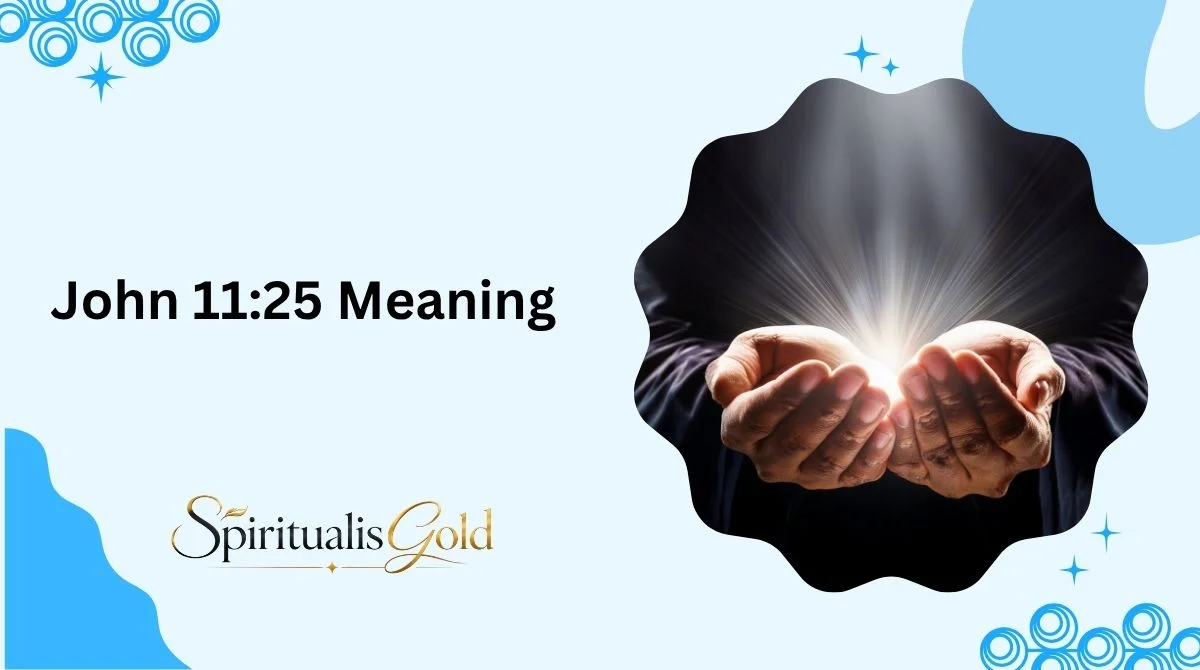
John 11:25 says this: “I am the resurrection and the life. The one who believes in me will live, even though they die.” Jesus is not only promising a future resurrection. He is saying he himself is the resurrection, right there, standing in front of her, before Lazarus ever opens his eyes again.
That’s the short answer. The rest of this guide walks through the full verse, the story around it, what each phrase actually means, and why this single sentence still comforts people standing at gravesides two thousand years later.
The Story Behind the Verse
Lazarus was sick. His sisters, Martha and Mary, sent word to Jesus, expecting him to come quickly. He didn’t. By the time Jesus reached Bethany, Lazarus had already died and been in the tomb for four days.
In first-century Jewish custom, four days mattered. Many believed the soul lingered near the body for three days after death and only departed fully on the fourth. Mourners assumed that once four days passed, there was no hope left. John includes that detail on purpose. He wants readers to know this wasn’t a near-death situation. Lazarus was gone, and everyone around Martha treated it as final.
Martha still ran to meet Jesus before he even reached the house. Her first words carried both disappointment and trust: “Lord, if you had been here, my brother would not have died. But even now I know that whatever you ask of God, God will give you.”
Jesus told her plainly, “Your brother will rise again.” Martha answered the way most faithful Jews of her time would have answered. She believed in a future resurrection, the one most Pharisees taught would happen “on the last day.” She was not wrong. She just didn’t yet understand who was standing in front of her.
That’s the exact moment Jesus spoke John 11:25.
Breaking Down John 11:25 Phrase by Phrase
“I Am the Resurrection”
Jesus didn’t say he merely performs resurrections. He said he is the resurrection. This fits a pattern John uses throughout his Gospel, where Jesus makes seven distinct “I am” statements: the bread of life, the light of the world, the gate, the good shepherd, the resurrection and the life, the way and the truth and the life, and the true vine.
Each one points back to the same claim. Jesus isn’t describing a role he performs on occasion. He’s describing who he is at his core. Martha was thinking about a future event on the last day. Jesus redirected her toward a present person standing beside her.
“And the Life”
The second half of the statement matters just as much as the first. Jesus isn’t only the one who brings people back from death. He is also the source of life itself, the ongoing, sustaining kind that doesn’t stop when the body does.
John opened his entire Gospel with this same idea: “In him was life, and that life was the light of all mankind” (John 1:4). By John 11:25, that theme comes full circle. The life Jesus gives isn’t just extra years tacked onto an ending. It’s a different category of life altogether, one that death cannot interrupt.
“The One Who Believes in Me Will Live, Even Though They Die”
Here’s where the verse turns personal. Jesus isn’t speaking in the abstract about resurrection as a theological concept. He’s making a direct promise to anyone who puts their trust in him. Physical death still happens. Bodies still fail, hearts still stop, funerals still get planned. But for the person who believes, death doesn’t get the last word.
This is the verse’s real comfort. It doesn’t pretend death isn’t real or painful. It says death isn’t permanent for the believer.
“Do You Believe This?” (Verse 26)
Jesus didn’t stop at verse 25. He immediately asked Martha a direct question in verse 26: “Whoever lives by believing in me will never die. Do you believe this?”
That question is the hinge of the whole passage. A theological statement about resurrection becomes a personal challenge. Martha had to decide whether she actually trusted the man in front of her, not just the doctrine she’d been raised on. Her answer was immediate: “Yes, Lord, I believe that you are the Messiah, the Son of God, who is to come into the world.”
Why Jesus Raised Lazarus If He Already Said This

Some readers wonder why Jesus bothered raising Lazarus physically if the real point was spiritual life through belief. The miracle that follows in verses 38 through 44 answers that question directly.
Jesus went to the tomb, had the stone rolled away, and called out, “Lazarus, come out!” Lazarus walked out still wrapped in burial cloths. John records this as the seventh and final public sign in his Gospel, the clearest possible proof that the claim in verse 25 wasn’t just comforting language. Jesus backed up the words with action.
The raising of Lazarus also foreshadows Jesus’ own resurrection just a few chapters later. Lazarus would eventually die again someday. Jesus would not. His resurrection became the permanent guarantee behind the temporary one Lazarus received.
What “Resurrection and Life” Meant to Martha’s Grief
It’s worth sitting with how strange this moment was for Martha. She had already resigned herself to a theological fact: resurrection happens someday, far in the future, on the last day. That belief was true, but it was distant. It didn’t touch her raw grief standing outside her brother’s tomb that afternoon.
Jesus pulled that far-off hope into the present tense. He didn’t correct her theology. He expanded it. The resurrection she believed would happen someday was standing in front of her, close enough to grieve with her and act on her behalf.
A lot of people carry grief the same way Martha did, holding a belief that’s true but distant, something they accept but don’t feel. John 11:25 suggests that comfort isn’t found only in correct doctrine. It’s found in trusting a person.
How Different Christian Traditions Read This Verse
Most Christian traditions agree on the core meaning of John 11:25, even if they emphasize different parts of it.
- Protestant and evangelical teaching often highlights the personal invitation in “the one who believes in me will live.” This reading treats the verse as a call to individual faith and assurance of eternal life.
- Catholic and Orthodox tradition frequently connects this passage to the broader promise of bodily resurrection at the end of time, tying it closely to the hope expressed at funeral Masses and memorial liturgies.
- Reformed commentary, including older writers like John Gill, treats the verse as proof of Christ’s own power and authority over both physical and spiritual death, something he does “of himself,” without needing to ask the Father first.
- Matthew Henry’s commentary reads it as an enlargement of Martha’s expectations, moving her from a distant doctrine to immediate trust in the person making the claim.
These readings don’t contradict each other. They highlight different angles of the same statement: Christ’s authority, the believer’s hope, and the personal relationship that connects the two.
How People Apply John 11:25 Today
This verse shows up constantly at funerals, in hospice rooms, and in private moments of fear about death. A few common ways people lean on it:
- At funerals and memorial services. It’s one of the most frequently read passages at Christian funerals, often paired with Psalm 23 or 1 Corinthians 15.
- During illness or fear of death. Many people recite or meditate on this verse when facing a diagnosis, surgery, or the death of someone close to them.
- As a daily reminder of hope. Some keep the verse on a card, a tattoo, or a bookmark, returning to it as a short, memorable statement of what they believe happens after death.
- As an answer to doubt. The direct question in verse 26, “Do you believe this?”, gets used in personal reflection or small group study as a way to examine one’s own faith honestly.
Common Misreadings Worth Clearing Up
A couple of misunderstandings show up often enough to mention.
This verse isn’t a promise against physical death. Jesus doesn’t say believers will avoid dying. He says death won’t be the end of the story for them. Lazarus himself died a second time years later.
This isn’t primarily about the “last day” resurrection Martha mentioned first. Jesus doesn’t deny that future event. He adds that he himself is already the source of it, present and active, not just a scheduled event on a future calendar.
It isn’t a generic statement about life after death in general. The promise is tied specifically to belief in Jesus, not to resurrection as an abstract spiritual principle.
John 11:25 Explanation
John 11:25 is one of the most powerful statements Jesus made during His earthly ministry. In this verse, Jesus declares that He is the resurrection and the life, offering hope to those who believe in Him. His words reveal that death does not have the final victory and that eternal life is found through a personal relationship with Him.
Jesus speaks these words to Martha after the death of her brother, Lazarus. Martha is grieving, and she believes Jesus could have prevented her brother’s death if He had arrived earlier. Although she trusts that Lazarus will rise again on the last day, Jesus invites her to understand something deeper. He is not simply a teacher who explains resurrection; He is the One who has authority over life and death.
The meaning of John 11:25 is that Jesus is the source of spiritual and eternal life. Those who believe in Him may experience physical death, but death cannot separate them from the promise of eternal life. His words encourage believers to place their hope in His power rather than allowing their circumstances to define their faith.
This verse also speaks to people who feel spiritually lost, emotionally broken, or overwhelmed by suffering. Just as Jesus brought hope to a grieving family, He offers comfort to those facing difficult seasons. His message reminds us that even when life appears hopeless, God’s power is greater than the situations we cannot control.
John 11:25-26 Sermon Outline
A sermon based on John 11:25–26 can focus on the authority of Jesus, the promise of eternal life, and the importance of personal faith. These verses provide a meaningful opportunity to encourage a congregation to trust Christ during times of grief, uncertainty, and spiritual struggle.
Jesus is the resurrection. His declaration reveals that death does not have the final word for those who belong to Him. The resurrection of Lazarus demonstrates His authority over death and points toward His own resurrection, through which Christians understand the foundation of their hope.
Jesus is the life. Life in Christ involves more than physical existence. It includes reconciliation with God, spiritual renewal, and the promise of eternal fellowship with Him. Believers can experience this spiritual life even while navigating pain, disappointment, and uncertainty.
Faith requires a personal response. Jesus asks Martha whether she believes what He has told her. This question makes the message personal rather than merely theoretical. Knowing biblical teachings about resurrection is important, but trusting Jesus requires a response of the heart.
Hope remains strong in difficult seasons. Martha’s story shows that faith and grief can exist together. Christians do not need to pretend that suffering does not hurt. Instead, they can bring their pain to Jesus while trusting that His promises remain true.
A sermon conclusion can remind listeners that the Christian hope is not based on a trouble-free life. It rests on the character and authority of Jesus Christ. When circumstances seem beyond repair, believers can continue trusting the One who promises life beyond death and hope beyond despair.
John 11:25-26 Explained
John 11:25–26 presents Jesus as the source of resurrection and eternal life. He tells Martha that whoever believes in Him will live, even though they die, and that whoever lives and believes in Him will never die in the ultimate spiritual sense. These statements must be understood in light of the difference between physical death and eternal life.
Jesus does not promise that His followers will never experience physical death. Lazarus himself would eventually die again after being raised. Instead, Jesus points to a life that extends beyond the grave. Physical death may end earthly life, but it cannot destroy the eternal life Christ promises to His people.
The passage also emphasizes the importance of believing in Jesus personally. Martha is invited to move beyond her understanding of a future resurrection and recognize the authority standing before her. Jesus is present with her in the middle of her grief, offering a hope that is rooted in who He is.
For Christians today, these verses provide comfort during bereavement and encouragement during uncertain times. They teach that faith does not eliminate every painful experience, but it gives suffering a different perspective. The believer’s future is held in God’s hands, and the promise of resurrection gives meaning to the hope of eternal life.
I Am the Resurrection and the Life John 11:25
When Jesus says, “I am the resurrection and the life,” He makes a declaration about His divine authority and His relationship with those who believe in Him. The statement is not simply about a miraculous event that will happen in the future. It identifies Jesus Himself as the source of resurrection and everlasting life.
The word resurrection points to victory over death. In the story of Lazarus, Jesus demonstrates this authority by calling him out of the tomb. The miracle reveals that death is not beyond Christ’s power. It also foreshadows the greater victory Christians associate with Jesus’ own resurrection.
The word life carries an equally important meaning. Jesus offers spiritual life through faith in Him and promises eternal life beyond physical death. This promise gives believers a reason to remain hopeful even when they encounter loss, illness, disappointment, or fear.
These words also reveal the personal nature of Christian faith. Jesus does not merely offer information about life after death; He invites people to trust Him. His promise rests on His identity, His power, and His faithfulness.
For anyone struggling to understand suffering, this verse offers a reminder that present circumstances do not tell the whole story. Christians can grieve honestly while holding on to hope. Their confidence is not that death and sorrow are unreal, but that Jesus has the authority to overcome death and fulfill His promise of eternal life.
John 11:25 Sermon
A sermon on John 11:25 can begin with the setting of the passage: a grieving family, a beloved brother who has died, and a Savior who arrives when hope seems lost. Martha’s experience reflects a question many people ask during hardship: Why did God not intervene when we needed Him most?
Jesus does not dismiss Martha’s grief or offer her an easy explanation for everything that has happened. Instead, He directs her attention to who He is. His declaration that He is the resurrection and the life invites her to trust His authority even before she sees what He is about to do.
The central message of the sermon is that our hope rests in Jesus, not in our ability to understand every circumstance. Martha knows that resurrection will come in the future, but Jesus helps her recognize that God’s power is present with her in the moment of sorrow.
This message is relevant to believers facing broken relationships, unanswered prayers, personal disappointments, or the death of someone they love. Faith does not mean that every prayer will be answered according to our preferred timing. It means continuing to trust God’s character when the outcome remains uncertain.
The sermon can conclude by inviting listeners to examine their own faith. Do they trust Jesus only when life is going well, or do they continue turning to Him when circumstances become painful? John 11:25 encourages believers to build their hope on Christ, whose promise of eternal life reaches beyond the limits of earthly experience.
John 11:25-26 Lesson

The main lesson of John 11:25–26 is that Jesus offers a hope that is stronger than death. His words teach believers to look beyond temporary circumstances and trust the promise of eternal life. Although grief and suffering remain real parts of human experience, they do not have the power to cancel God’s promise to those who believe in Christ.
Another important lesson is that faith can exist alongside sorrow. Martha loved her brother and felt the pain of losing him, yet she continued speaking with Jesus. Her example reminds Christians that they do not need to hide their emotions to demonstrate genuine faith. They can bring their questions, tears, and fears before God while continuing to trust Him.
The passage also teaches that knowing about Jesus is different from personally trusting Him. Jesus asks Martha whether she believes, inviting her to respond to His identity rather than simply agree with a religious idea. This encourages readers to consider how their beliefs shape their daily choices, attitudes, and relationships.
Finally, John 11:25–26 encourages believers to live with an eternal perspective. The promise of resurrection does not make earthly life unimportant. Instead, it reminds Christians to value their time, love others sincerely, serve faithfully, and remain hopeful even during difficult seasons.
What Did Jesus Mean When He Said, “I Am the Resurrection and the Life”?
Jesus meant that He possesses the authority to give life and overcome death. His words to Martha reveal that resurrection is not merely a future event or an abstract religious belief. It is connected directly to His identity and His power as the Son of God.
When Jesus says that the believer will live even though they die, He acknowledges the reality of physical death while pointing toward eternal life. Christians understand this promise as assurance that death does not permanently separate those who belong to Christ from the life God gives.
His statement also means that true spiritual life comes through Him. A person may enjoy worldly success, material comfort, and social recognition while still experiencing spiritual emptiness. Jesus offers a deeper kind of life rooted in relationship with God, forgiveness, and the hope of eternity.
The miracle that follows makes His message especially powerful. Jesus calls Lazarus out of the tomb, demonstrating His authority over death in a visible way. However, the passage points beyond Lazarus’s temporary return to life toward the greater Christian hope of resurrection through Christ.
For modern readers, Jesus’ declaration offers reassurance during seasons when the future feels uncertain. It does not promise freedom from every hardship, nor does it mean believers will never experience grief. Instead, it teaches that suffering and death do not have the final authority over the future God promises.
Ultimately, Jesus calls people to place their faith in Him. His words invite believers to find hope not only in what He can do, but also in who He is: the resurrection, the life, and the foundation of Christian hope.
John 11:26 Meaning
John 11:26 emphasizes the promise that those who live and believe in Jesus will never die in the ultimate spiritual sense. Jesus is not saying that Christians will avoid physical death. Rather, He is teaching that the eternal life He gives cannot be destroyed by the death of the physical body.
The verse highlights the connection between faith and eternal life. Believing in Jesus means trusting Him as the One who reconciles people to God and offers salvation. This belief is more than intellectual agreement; it involves placing one’s confidence in Christ and responding to Him with trust.
Jesus’ question to Martha also invites personal reflection. The promise is presented in a conversation with someone who is grieving, making it clear that Christian hope speaks directly to real human pain. Martha must decide whether she trusts Jesus in the middle of a situation she cannot change herself.
For believers, John 11:26 offers comfort when facing mortality and mourning loved ones. It reminds them that physical death is not the end of God’s redemptive purpose. Eternal life gives them a reason to face the future with confidence while continuing to live faithfully in the present.
The deeper meaning of this verse is that life with Christ reaches beyond earthly limitations. Christians may experience weakness, loss, and uncertainty, but their hope remains grounded in His promise. Through faith in Jesus, they can approach life’s hardest questions with humility, courage, and lasting hope.
People Also Search
john 11:25 explanation
john 11:25-26 sermon outline
john 11:25-26 explained
i am the resurrection and the life john 11:25
john 11:25 sermon
john 11:25-26 lesson
what did jesus mean when he said, i am the resurrection and the life
Frequently Asked Questions
What does Jesus mean by saying “I am the resurrection and the life”?
When Jesus said, “I am the resurrection and the life” (John 11:25), He was declaring that death does not have the final authority over those who believe in Him. He offers more than physical life; He promises eternal life, spiritual renewal, and hope that remains even beyond the grave.
Who was Jesus speaking to when he said “I am the resurrection and the life”?
Jesus spoke these words to Martha, the sister of Lazarus, after Lazarus had died. Martha was grieving and struggling with the pain of losing her brother. Jesus used that moment to reveal that He is the source of resurrection and the foundation of hope for everyone who trusts in Him.
What is “I Am the Resurrection” about?
“I Am the Resurrection” is about Jesus’ power over death and His promise of eternal life. It reminds believers that death is not the end of their story and that faith in Christ offers hope beyond human understanding. It is also a message of spiritual restoration and a new beginning through Him.
Did Jesus say I am the resurrection?
Yes, Jesus directly said, “I am the resurrection and the life” in John 11:25. He spoke these words before raising Lazarus from the dead, demonstrating that His authority extends beyond the limitations of human life and death. His statement remains a central truth of Christian faith.
What are five benefits of Jesus’ resurrection?
Jesus’ resurrection brings five profound blessings: victory over death, forgiveness of sins, the promise of eternal life, renewed hope during difficult times, and the assurance of a future resurrection for believers. These benefits remind Christians that their faith is built on a living Savior, not simply the memory of a great teacher.
What did Jesus mean when he says “I am the life”?
Jesus meant that true and lasting life comes through Him. He offers spiritual life that goes beyond physical existence, giving people purpose, peace, forgiveness, and a restored relationship with God. His words remind believers that a meaningful life begins with knowing Him and continues through faith in His presence.
Final Thought
Hope is easy to talk about in the abstract and much harder to hold onto standing at a graveside. That’s exactly the gap John 11:25 was spoken into. Jesus didn’t offer Martha a theory about the future. He offered himself, right there, in the middle of her grief, and asked if she believed it. The verse still works the same way today. It doesn’t erase the pain of death, but it answers the fear underneath it with a specific promise, tied to a specific person, open to anyone willing to answer the same question Martha did.

Riaz Ahmad is the author of SpiritualisGold.com, sharing meaningful spiritual lines, deep words, life lessons, and inspirational thoughts. With 6+ years of experience creating spiritual and reflective content, he aims to help readers find inner peace, wisdom, hope, and a deeper connection with life.