Last updated: October 26, 2026
You watched a baby get dunked at a cousin’s christening, or you saw an adult come up gasping out of a river at a Baptist service, and the same question followed you home: what is actually happening there? Is it a cleaning ritual, a membership card, or something more?
Here’s the direct answer. Christian baptism is the outward sign of an inward decision to follow Jesus Christ. It uses water, usually paired with the words “in the name of the Father, and of the Son, and of the Holy Spirit,” to mark a person’s entry into the Christian faith and their identification with Jesus’s death, burial, and resurrection. Most traditions see it as commanded by Jesus himself, not as something churches invented later.
That single idea, dying to an old life and rising into a new one, sits underneath almost every disagreement Christians have about baptism. Below, we’ll walk through where the practice comes from, what it symbolizes, why denominations disagree about the “how” and “who,” and what you can expect if you’re getting baptized yourself.
The Quick Answer: What Baptism Means
If you only read one section, read this one. Baptism means three overlapping things across nearly all Christian traditions:
- Union with Christ. Going under the water pictures being buried with Jesus; coming back up pictures his resurrection, and now yours.
- Cleansing from sin. The water symbolizes a washing away of guilt and a fresh start, not a magic scrub that removes dirt.
- Public entry into the church. Baptism marks someone’s formal welcome into the community of believers, not just a private feeling.
Christians disagree on exactly what baptism does (some see it as symbolic, others as a means of grace), but almost no one disagrees that it matters. Jesus commanded it directly in Matthew 28:19, telling his followers to make disciples of all nations, “baptizing them in the name of the Father and of the Son and of the Holy Spirit.”
Where Baptism Comes From
Baptism didn’t appear out of nowhere. John the Baptist was already baptizing people in the Jordan River before Jesus began his ministry, calling people to repent and turn back to God. His baptism was about preparation, getting ready for someone greater who was coming.
Then Jesus himself walked into that same river and asked John to baptize him. John hesitated. Jesus insisted, saying it was necessary “to fulfill all righteousness.” When he came up out of the water, the Gospels describe the heavens opening, the Spirit descending like a dove, and a voice from heaven saying, “This is my beloved Son, with whom I am well pleased.”
That moment changed what baptism meant. It was no longer only about repentance. It became tied to Jesus’s own identity and mission. After his resurrection, he gave his followers the Great Commission, telling them to baptize new disciples as part of spreading the faith. The early church took that instruction seriously. The book of Acts shows baptism happening almost immediately after people believed, sometimes within hours of hearing the message for the first time.
The Three Big Symbols Inside Every Baptism
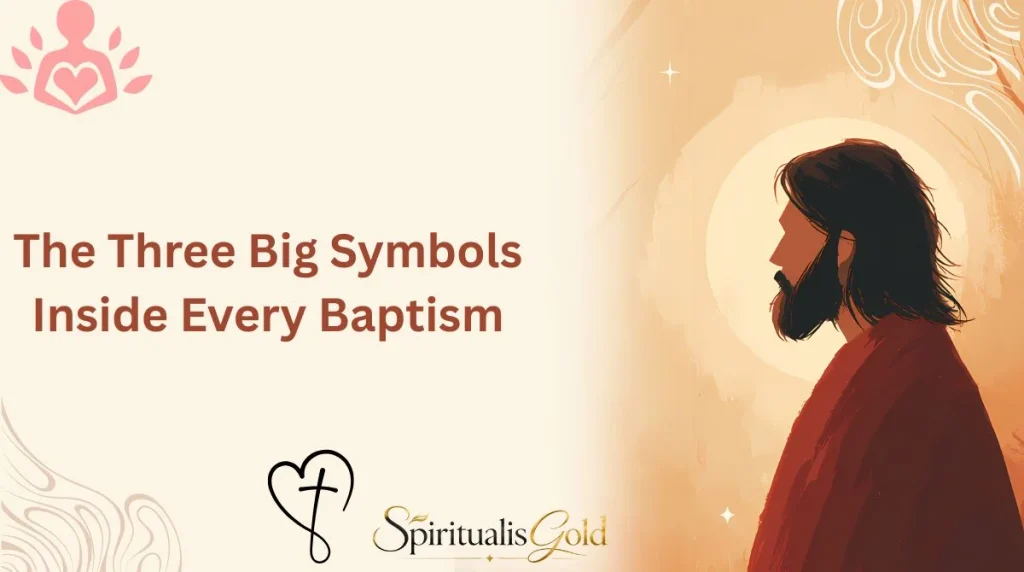
Strip away the denominational debates for a moment, and three symbols show up again and again. Understanding these helps everything else make sense.
1. Death and Resurrection
Paul writes in Romans 6:4, “We were buried therefore with him by baptism into death, in order that, just as Christ was raised from the dead by the glory of the Father, we too might walk in newness of life.” Going under the water pictures burial. Rising from the water pictures resurrection. This is why full immersion carries such strong symbolic weight for many traditions, the physical motion matches the spiritual claim.
2. Washing and New Life
Water has always carried the idea of cleansing, long before Christianity existed. Baptism takes that universal image and applies it to sin. The water doesn’t literally remove guilt the way soap removes dirt. It pictures something God does internally: forgiving, cleansing, and starting a person over.
3. Belonging to the Church
Baptism isn’t private. 1 Corinthians 12:13 describes believers as being baptized into one body, “whether Jews or Greeks, slave or free.” Historically, baptism was the moment someone stopped being an outside observer of the Christian faith and became a participant in it, with all the responsibility and support that comes with belonging to a church family.
Why Denominations Disagree: Infant vs. Believer’s Baptism
This is the question that splits Christian traditions the most, and it’s worth understanding both sides honestly.
Believer’s baptism (practiced by Baptists, Pentecostals, many non-denominational churches, and others) holds that baptism should follow a personal profession of faith. A person needs to be old enough to understand what they’re committing to and choose it themselves. Under this view, baptizing an infant who can’t yet believe anything misses the point of the act.
Infant baptism (practiced by Catholic, Orthodox, Lutheran, and many Reformed and Anglican churches) holds that baptism functions more like a covenant sign, similar to circumcision in the Old Testament. Children are welcomed into the faith community through their parents’ belief, with the expectation that they’ll grow into that commitment personally through confirmation or a similar rite later on.
Neither side views the other as fabricating their position out of nowhere. Both are reading the same Bible and reaching different conclusions about what baptism is for. If you grew up in one tradition and married into another, this is often the first theological disagreement a couple actually has to work through together.
Immersion, Pouring, or Sprinkling: Does the Method Matter?
Walk into a Baptist church and you’ll likely see a baptismal pool built right into the stage. Walk into a Catholic church and you’ll usually see a small font with water poured or sprinkled over the head. Both churches call this baptism. Why the difference?
- Immersion (full submersion in water) is favored by traditions that emphasize the symbolism of burial and resurrection most literally. The Greek word baptizo, which gives us the English word “baptism,” originally meant “to dip” or “to immerse.”
- Pouring (water poured over the head) has ancient roots too. Early Christian writings describe pouring as an acceptable practice, particularly when immersion wasn’t practical.
- Sprinkling (a small amount of water applied to the forehead) became common in Western churches, especially for infant baptism, where full immersion of a baby wasn’t considered necessary or safe.
Most theologians across traditions agree the method matters less than the intent behind it. The heart of baptism is the commitment it represents, not the exact volume of water used.
What a Baptism Service Actually Looks Like
If you’ve never attended one, or you’re preparing for your own, here’s a simple walkthrough of what usually happens.
- A statement of faith. The person being baptized (or their parents, in infant baptism) affirms belief in Jesus Christ, often answering a short set of questions out loud.
- The baptismal formula. The officiant says some version of “I baptize you in the name of the Father, and of the Son, and of the Holy Spirit.”
- The water. Depending on the tradition, the person is fully submerged, has water poured over their head, or receives a sprinkle on the forehead.
- A welcome. The congregation often responds with applause, a blessing, or a formal welcome into church membership.
- A certificate or record. Many churches keep a record of baptism, sometimes giving the person a certificate to mark the date.
The whole thing usually takes just a few minutes, but for the person going under the water, it often feels like one of the most significant moments of their life.
Is Baptism Necessary for Salvation?
This question matters to a lot of people considering baptism, so it deserves a direct answer. Most evangelical Protestant traditions teach that baptism does not save a person. Salvation comes through faith in Jesus Christ alone, and baptism is the obedient response to that faith, not the cause of it. Ephesians 2:8-9 is the verse most often cited here: salvation is “by grace through faith,” not by works.
Catholic, Orthodox, and some Lutheran traditions teach that baptism carries a stronger role, functioning as a means through which God actually confers grace, sometimes described as “baptismal regeneration.” Under this view, baptism isn’t just a symbol responding to salvation that already happened; it’s part of how salvation happens.
This is a genuine theological divide, not a minor footnote. If you’re exploring baptism for yourself, it’s worth asking your pastor or priest directly which view your specific church holds, since it shapes how urgently they’ll encourage you toward it.
Getting Baptized as an Adult: What to Expect Emotionally
A lot of adults who get baptized later in life describe a strange mix of nervousness and relief beforehand. You’re standing in front of people you know, sometimes in a swimsuit or a baptismal robe, about to do something deeply personal in public. That vulnerability is normal.
Most churches pair baptism with a short testimony, a chance for the person to briefly share their story: how they came to faith, what changed, why they’re choosing this step now. You don’t need a polished speech. Pastors generally coach people through this beforehand, and congregations tend to respond with warmth rather than judgment.
Afterward, many people describe a genuine sense of closure, like a chapter of their life has visibly ended and a new one has started. Others say it felt anticlimactic in the moment but grew in meaning over the following weeks as they looked back on it. Both reactions are common, and neither one means the baptism “didn’t work.”
What Is Water Baptism According to the Bible?
Water baptism is a Christian practice in which a person is immersed in water or has water poured over them as a public expression of faith in Jesus Christ. According to the Bible, baptism represents a believer’s decision to follow Jesus, accept His teachings, and live a new life through faith. It is more than a religious ceremony or a tradition passed down through generations. It carries a deep spiritual message about repentance, forgiveness, obedience, and a transformed relationship with God.
In Matthew 28:19, Jesus instructed His disciples to go and make disciples of all nations, baptizing them in the name of the Father, the Son, and the Holy Spirit. This command shows that baptism holds an important place in Christian faith. Jesus did not present it as an unnecessary ritual but included it in the mission He gave His followers.
The Bible also connects baptism with the death and resurrection of Christ. Romans 6:3–4 explains that believers are baptized into Christ’s death so that, just as Christ was raised from the dead, they may walk in a new life. Going beneath the water symbolizes leaving the old way of life behind, while coming out of the water represents the beginning of a renewed life with Christ.
However, water itself does not replace genuine faith or automatically make someone spiritually mature. Baptism is an outward expression of an inward commitment. Its deepest meaning comes from a sincere heart that trusts Jesus and desires to follow Him. It reminds Christians that their faith should be visible not only during a baptism ceremony but also through their everyday choices, attitudes, and actions.
Baptism Meaning in the Bible
The biblical meaning of baptism is closely connected to cleansing, repentance, faith, spiritual renewal, and identification with Jesus Christ. The word baptism comes from the Greek word baptizō, commonly understood to mean to immerse or dip. In the Christian understanding, baptism represents a person’s willingness to turn away from sin and begin a life devoted to God.
John the Baptist preached a baptism of repentance, calling people to turn away from their sinful ways and prepare their hearts for the coming of the Lord. Mark 1:4 describes John’s ministry as a baptism of repentance for the forgiveness of sins. His message encouraged people to recognize their need for God and seek a genuine change of heart.
Christian baptism also points toward the saving work of Jesus. Through His death and resurrection, Christ offers forgiveness and the hope of eternal life. When believers are baptized, they publicly identify themselves with His sacrifice and resurrection. It is a powerful reminder that their old identity does not have to define their future.
Another important biblical meaning of baptism is belonging to the Christian community. Galatians 3:27 teaches that those baptized into Christ have clothed themselves with Christ. This imagery describes a new spiritual identity shaped by His character, love, and teachings.
Baptism should therefore be understood as more than getting wet or participating in a church tradition. It is a meaningful declaration that a person wants Christ to guide their life. It represents a commitment to grow spiritually, practice forgiveness, show compassion, and remain faithful even when following God becomes difficult.
Spiritual Significance of Water Baptism
The spiritual significance of water baptism goes far beyond its physical appearance. Water is used as a visible symbol of cleansing and renewal, reminding believers of God’s grace and the opportunity to begin again through Jesus Christ. Although the water itself does not wash away the guilt of sin, it represents the spiritual cleansing that Christians associate with faith in Christ.
One of the most meaningful aspects of baptism is its connection to spiritual transformation. Every believer has a past, including mistakes, regrets, and moments of weakness. Baptism reminds Christians that their past does not have to control their future. Through faith, they can turn toward God and seek a life guided by His truth.
Water baptism also symbolizes surrender. When someone chooses to be baptized, they are making a public statement that they no longer want to live only according to their own desires. Instead, they want to place their trust in Jesus and allow His teachings to influence their decisions. This surrender is not a promise of perfection but a willingness to keep growing in faith.
Another spiritual dimension is the connection between baptism and resurrection. Coming out of the water represents the hope of a new beginning, just as Jesus rose from the grave. It reminds believers that Christianity is not simply about avoiding wrongdoing; it is about developing a new way of living through love, humility, patience, and obedience.
Baptism also strengthens a believer’s sense of belonging. It publicly identifies someone with Christ and His people. For many Christians, this moment becomes a lasting reminder of their commitment to God, especially during seasons of doubt or spiritual struggle.
Ultimately, water baptism is a meaningful expression of faith, gratitude, and spiritual dedication. Its significance is not limited to the day of the ceremony. It points toward a lifelong journey of becoming more like Christ.
Why Is Baptism Important for Christians?
Baptism is important for Christians because it is an act of obedience to Jesus and a public declaration of faith. It gives believers an opportunity to express their commitment to Christ in a visible and meaningful way. While Christians may have different traditions concerning the method and timing of baptism, most recognize its important place in the life of faith.
One reason baptism matters is that Jesus Himself was baptized. Matthew 3:13–17 describes how Jesus came to John the Baptist to be baptized in the Jordan River. Although Jesus was without sin, He chose baptism to fulfill all righteousness. His example demonstrates humility and obedience to God’s purpose.
Baptism is also important because it allows believers to publicly acknowledge their relationship with Jesus. Faith is personal, but Christianity also involves openly identifying with Christ and becoming part of a community of believers. Baptism provides a special opportunity to make that commitment known.
Furthermore, baptism reminds Christians of the importance of repentance. Following Jesus involves recognizing personal shortcomings, turning away from sinful behavior, and seeking God’s guidance. Baptism symbolizes this decision and encourages believers to continue pursuing spiritual growth.
It is also a moment of encouragement and celebration for the church community. Family members, friends, and fellow believers can witness the commitment and support the newly baptized person in their spiritual journey.
Most importantly, baptism reminds Christians that their faith should be reflected in their lives. A meaningful baptism is not simply about what happens in the water; it is about the commitment that continues afterward. Through daily prayer, kindness, forgiveness, and obedience, believers demonstrate the faith they have publicly declared.
Reasons Why Baptism Is Important in Christian Faith
Baptism holds an important position in Christianity because it connects a believer’s faith with a visible act of commitment. It reminds Christians of the teachings of Jesus and encourages them to live according to His example. There are several meaningful reasons why baptism matters in a believer’s spiritual journey.
Obedience to Jesus Christ: One of the strongest reasons for baptism is that Jesus commanded His followers to baptize disciples. Matthew 28:19–20 makes this instruction clear. Choosing baptism is a way for believers to respond to His teaching with obedience and trust.
A public declaration of faith: Baptism gives Christians an opportunity to openly express their belief in Jesus. It communicates that they have chosen to follow Him and want their lives to reflect His teachings. This public declaration can also encourage others to explore their own relationship with God.
A symbol of forgiveness and cleansing: Baptism represents the spiritual cleansing that comes through God’s grace. It reminds believers that forgiveness is possible and that they do not need to remain defined by their past mistakes.
Identification with the death and resurrection of Christ: Romans 6:4 connects baptism with the death and resurrection of Jesus. This symbolism teaches Christians that following Christ involves leaving behind their old ways and embracing a renewed life.
Belonging to the Christian community: Baptism is also an expression of becoming part of the community of believers. It creates an opportunity for the church to welcome, encourage, and support someone who has publicly committed to following Jesus.
These reasons show that baptism is not merely a religious obligation. It is a meaningful expression of faith that connects believers with the central message of Christianity: the grace, sacrifice, and resurrection of Jesus Christ.
Importance of Water Baptism in a Believer’s Life
Water baptism plays an important role in a believer’s life because it provides a visible reminder of an inward spiritual commitment. It marks a meaningful moment when someone openly identifies with Jesus and expresses a desire to follow His teachings. Although spiritual growth continues throughout life, baptism can become a powerful milestone in that journey.
For many believers, baptism represents a fresh beginning. It reminds them that God’s grace offers hope even when they have made mistakes. Instead of allowing guilt or past failures to determine their future, they can move forward with faith and a desire to live differently.
Water baptism also encourages personal responsibility. After publicly declaring their faith, believers are reminded to make choices that reflect their commitment. This may involve showing patience when facing difficult people, forgiving those who have hurt them, speaking honestly, and treating others with compassion.
Another important aspect is spiritual encouragement. Remembering the day of baptism can help Christians reconnect with the promises they made and the faith that brought them to that decision. During challenging seasons, this memory may encourage them to remain committed to God.
Baptism also creates a sense of connection with other Christians. The church community can provide guidance, fellowship, prayer, and encouragement as a new believer learns to understand Scripture and develop a stronger relationship with Christ.
Ultimately, the importance of water baptism is found in what it represents: faith in Jesus, obedience to His teachings, and a willingness to pursue a transformed life. It is not the end of a spiritual journey but an important step in a lifelong relationship with God.
How Baptism Strengthens a Christian’s Relationship With God
Baptism can strengthen a Christian’s relationship with God by giving a visible expression to a personal decision of faith. It encourages believers to reflect on why they follow Jesus and what it means to place their trust in Him. The ceremony itself may last only a short time, but the spiritual commitment it represents can influence a person’s entire life.
One way baptism strengthens faith is by encouraging a deeper understanding of God’s grace. Christians recognize that their relationship with God is not based on human perfection. Instead, it rests on His love, mercy, and the saving work of Jesus Christ. Baptism provides a meaningful reminder of this truth.
It can also inspire a stronger commitment to prayer and Scripture. Someone who has chosen baptism may become more intentional about learning God’s Word, seeking wisdom, and developing a consistent prayer life. These practices help believers understand God’s character and apply biblical teachings to everyday situations.
Baptism also encourages humility. Following Jesus requires recognizing that no person has all the answers or lives without mistakes. A baptized believer is still learning, growing, and depending on God’s guidance. This understanding can develop a more sincere and humble relationship with Him.
Most importantly, baptism reminds Christians that their faith should continue beyond the church. Their relationship with God should influence how they treat their families, respond to challenges, help others, and make important decisions.
A strong relationship with God is built through ongoing trust and commitment. Baptism serves as a meaningful public expression of that relationship and reminds believers to continue walking with Christ every day.
People Also Search
3 reasons why baptism is important
5 importance of water baptism
10 importance of baptism
spiritual significance of water baptism
what is water baptism according to the bible
baptism meaning in bible
4 reasons why baptism is important
5 importance of baptism
Frequently Asked Questions
Why Did Jesus Use Water for Baptism?
Jesus used water for baptism because it represents cleansing, renewal, and a new beginning in a person’s relationship with God. Water is a visible symbol of spiritual purification, reminding believers that following God involves leaving behind sin and embracing a transformed life.
What Are the Three Things That Happened When Jesus Was Baptized?
When Jesus was baptized, three remarkable events took place: the heavens opened, the Holy Spirit descended upon Him like a dove, and God’s voice declared that Jesus was His beloved Son. These events revealed His divine identity and marked the beginning of His public ministry.
What Are the Five Main Reasons Why Baptism by Water Is Important in Christianity?
Water baptism is important because it symbolizes repentance, forgiveness, spiritual cleansing, obedience to Jesus, and a new life of faith. It also represents a believer’s identification with the death and resurrection of Christ, showing a willingness to walk in God’s truth.
What Is the Main Purpose of Baptism in Christianity?
The main purpose of baptism in Christianity is to publicly express faith in Jesus Christ and demonstrate a person’s commitment to following Him. It represents spiritual renewal and a new beginning, reminding believers that their lives should reflect Christ’s love, teachings, and example.
What Are the Three Reasons Jesus Was Baptized?
Jesus was baptized to fulfill all righteousness, publicly identify Himself with God’s purpose, and reveal His relationship with the Father and the Holy Spirit. Although Jesus was without sin, His baptism demonstrated obedience to God’s will and marked the beginning of His earthly ministry.
What Is the Spiritual Meaning of Water Baptism?
The spiritual meaning of water baptism goes beyond the physical act of entering water. It symbolizes dying to an old way of life and rising into a renewed life with Christ. It reminds believers that genuine faith involves inner transformation, surrender to God, and a lifelong commitment to walking in His presence.
Final Thought
Baptism has carried the same core message for two thousand years: an old life ends, and a new one begins, marked in water and witnessed by a community. Whatever your tradition teaches about the exact mechanics, the step itself is meant to be taken seriously and held onto afterward, not treated as a box to check. If you’re considering it, talk to a pastor or priest who can walk you through what your specific church believes before the day arrives. That conversation will matter more than any detail about how much water gets used.

Riaz Ahmad is the author of SpiritualisGold.com, sharing meaningful spiritual lines, deep words, life lessons, and inspirational thoughts. With 6+ years of experience creating spiritual and reflective content, he aims to help readers find inner peace, wisdom, hope, and a deeper connection with life.