Last updated: October 25, 2026
Maybe you felt a sudden chill in an empty room. Maybe you woke from a dream so vivid it felt like a visit, not a dream at all. Or maybe you just can’t shake the sense that something exists beyond what you can see and touch, and you want to understand it better.
Here’s the direct answer. The spirit realm is the term many spiritual traditions use for a non-physical world believed to exist alongside our own, a place inhabited by spirits, angels, ancestors, or other beings without a body. It’s described as separate from the physical world but connected to it, with some traditions teaching that the two realms constantly interact and influence each other.
This idea shows up across Spiritualism, Christianity, Indigenous belief systems, and modern energy work, and each one describes it a little differently. Below, I’ll walk through where the concept comes from, who or what different traditions believe lives there, the signs people associate with it, and how to approach the whole topic with a clear head.
What Is the Spirit Realm?
At its core, the spirit realm is a belief in an unseen dimension that exists apart from the physical, material world we live in day to day. It’s not a location you could point to on a map. It’s described more as a different layer of reality.
Different traditions frame this layer in their own language:
- Spiritualism calls it the “spirit world,” a place where souls continue to exist after death, organized into different levels or spheres.
- Christian theology often describes it as the unseen dimension where God, angels, and spiritual forces operate, existing before and beyond the physical creation.
- Many Indigenous and folk traditions describe a spirit world tied closely to nature, ancestors, and the land itself, rather than a separate heaven far away.
- Modern energy and intuitive work tends to describe it as a field of consciousness or vibration that people can tune into through meditation, dreams, or heightened awareness.
The common thread across all of them is simple: something exists beyond the physical, and it can touch our lives in ways we don’t always understand.
Where Did the Idea Come From?
The concept of a world beyond the physical one is old. Almost every culture in human history has had some version of it, whether that’s an afterlife, an ancestor realm, or a heavenly plane.
In the 19th century, the Spiritualism movement built an entire framework around this idea. Spiritualist writers described the spirit world as a real, organized place made of different spheres, with Emanuel Swedenborg’s earlier writings shaping much of how they pictured it. They believed people on earth could communicate with those spheres through mediums and séances.
Christianity has its own long-standing teaching on this, separate from Spiritualism. In biblical theology, the spiritual realm is described as the unseen dimension where God exists, where angels and spiritual forces act, and where believers are said to have access through faith.
Indigenous traditions around the world often describe something closer to a woven-together reality, where ancestors, nature spirits, and the living all share the same space rather than being divided into separate “worlds.”
None of these traditions agree on every detail. But the belief that physical life isn’t the whole picture keeps showing up, generation after generation, culture after culture.
Who or What Lives There, According to Different Beliefs
This is where traditions start to differ quite a bit. Ask five different spiritual teachers what inhabits the spirit realm, and you’ll likely get five different answers.
Angels. In Christian and many Western spiritual frameworks, angels are described as messengers who exist in the spirit realm and occasionally cross into the physical one to guide, protect, or deliver a message.
Ancestors and loved ones who have passed. Many traditions, from Spiritualism to various Indigenous and folk beliefs, hold that people who have died continue to exist in spirit form and can still watch over or communicate with the living.
Spirit guides. Common in modern intuitive and New Age practice, spirit guides are described as non-physical beings who offer wisdom and direction to a specific person, sometimes over an entire lifetime.
Nature spirits. Many older folk and animist traditions describe spirits tied to specific places, like rivers, mountains, or forests, rather than beings separate from the physical world entirely.
Lower or troubling energies. Most traditions also acknowledge the possibility of spirits or forces that aren’t benevolent. This is usually framed with caution rather than fear, and most teachers recommend grounding practices before any deliberate attempt to connect.
Common Signs People Associate With the Spirit Realm
A lot of people come to this topic because something happened that felt like more than coincidence. These are the signs that show up most often in readers’ stories and across spiritual writing.
- Vivid dreams involving someone who has passed away, especially ones that feel unusually clear or “real” compared to typical dreams
- Unexplained sounds or a sense of presence, like footsteps, a voice, or simply feeling like you’re not alone in a room
- Sudden temperature changes, particularly cold spots that seem to come from nowhere
- Repeating numbers or symbols, like 11:11 or a specific animal showing up again and again
- A strong gut feeling right before something happens, almost like advance notice
None of these are proof of anything. They’re patterns people notice, and whether you read them as spiritual contact or simple coincidence depends a lot on your own beliefs and experience.
How People Try to Connect With the Spirit Realm

If someone wants to explore this topic hands-on rather than just read about it, most traditions point to a handful of practices. None of these require special equipment or training to start.
- Meditation. Quieting the mind is considered the most basic doorway. Many practitioners say a calm, still mind is more open to subtle impressions than a busy one.
- Prayer. In Christian and many other faith traditions, prayer is described as direct communication that bridges the physical and spiritual realms.
- Dream journaling. Writing down dreams as soon as you wake up is a common practice for noticing patterns that might point to something beyond an ordinary dream.
- Working with a medium. Some people choose to consult someone who claims the ability to communicate with spirits on their behalf. This is a personal choice, and it’s worth approaching with the same healthy skepticism you’d bring to any paid service.
- Quiet, intentional moments at a loved one’s grave or a meaningful place. Many people describe feeling a sense of connection simply by sitting somewhere that mattered to the person they lost.
A lot of experienced practitioners will tell you the same thing: this isn’t about forcing a dramatic experience. It’s closer to building a habit of paying attention.
Spirit Realm vs. the Physical World
One question that comes up again and again: are these two realms completely separate, or do they overlap?
Most traditions land somewhere in the middle. Spiritualist teaching holds that the spirit world and the physical world are independent but constantly interacting, able to influence one another even though they function differently. Christian theology similarly teaches that the spiritual realm existed before the physical one and continues to act on it, even though it can’t be seen with physical eyes.
Think of it less like two separate rooms with a locked door between them, and more like two radio frequencies that occasionally pick up static from each other. That’s the general shape of how most traditions describe the relationship, even if the specific mechanics differ from one belief system to the next.
Is There Scientific Evidence for the Spirit Realm?
Here’s the honest, necessary part of this article. There is no scientific evidence that a spirit realm exists. Belief in an unseen dimension, an afterlife, or spiritual beings sits firmly in the territory of faith and personal conviction, not measurable, testable fact.
That doesn’t make the belief meaningless. Religion, philosophy, and personal experience operate differently than a lab experiment, and billions of people throughout history have found real comfort, structure, and meaning in these beliefs. But a good article on this topic owes you honesty: this is a matter of belief, not something science has confirmed.
If an experience ever feels frightening, overwhelming, or tied to a decline in your mental health, that’s worth bringing to a doctor or mental health professional, not something to work through with spiritual practice alone. Hallucinations, severe anxiety, or sudden personality changes have physical and psychological causes that deserve real medical attention.
A Grounded Way to Approach This Topic
If you’re curious about the spirit realm but want to stay sensible about it, here’s a simple approach that works for most people.
Start by noticing rather than assuming. If something unusual happens, like a vivid dream or an odd feeling, sit with it before jumping to a conclusion. Write it down with the date and context.
Keep your feet on the ground, literally and figuratively. Grounding practices, like a few slow breaths or a short walk outside, help most people feel clear-headed rather than overwhelmed when exploring unfamiliar spiritual territory.
Hold the belief loosely. You don’t need to prove the spirit realm exists to find value in reflecting on it. Treating it as a lens for meaning, rather than a fact to defend, tends to keep people both curious and grounded.
And finally, separate the spiritual from the medical. If something physical is going on, like sleep issues, anxiety, or a health scare, get that checked by a professional first. Spiritual meaning can sit alongside good medical care. It shouldn’t replace it.
Spiritual Realm in the Bible

The spiritual realm in the Bible refers to the unseen reality where God, angels, and spiritual beings exist. It is a dimension that cannot be understood through ordinary human senses, yet Scripture teaches that it is real and connected to our everyday lives. While people experience the physical world through sight, hearing, and touch, the spiritual realm involves faith, prayer, worship, and a relationship with God.
The Bible provides several examples of this invisible reality. In Ephesians 6:12, Paul explains that our struggle is not merely against flesh and blood but against spiritual forces of evil. This passage reminds believers that life involves more than physical circumstances. There are spiritual influences that shape the challenges people face, which is why faith and spiritual awareness are important.
Another powerful example appears in 2 Kings 6:15–17. When Elisha’s servant became frightened by the enemy army surrounding them, Elisha prayed that God would open his eyes. The servant then saw the mountain filled with heavenly horses and chariots of fire. This story illustrates that God’s presence and protection can exist beyond what human eyes naturally see.
The Bible does not encourage Christians to chase supernatural experiences or attempt to control the unseen world. Instead, it teaches them to seek God through sincere prayer, obedience, and faith. Understanding the spiritual realm begins with recognizing God’s authority and trusting that His presence is greater than anything we can see or experience.
How to Enter the Spiritual Realm
Entering the spiritual realm is often described as becoming more spiritually aware and developing a deeper relationship with God. From a biblical perspective, it does not mean physically traveling to another dimension or performing secret rituals. Rather, it means drawing closer to God through faith and allowing His truth to guide your thoughts, decisions, and actions.
Prayer is one of the most important ways to develop this connection. When you pray sincerely, you communicate with God, express your concerns, seek forgiveness, and ask for wisdom. You do not need special words or complicated techniques. Jesus taught His followers to pray with humility and sincerity rather than trying to impress others with their words.
Reading Scripture is another important practice. The Bible helps believers understand God’s character, His promises, and His purpose for their lives. Spending time reflecting on passages such as Psalm 46:10 or James 4:8 can encourage a person to become more peaceful and spiritually focused.
Worship, gratitude, repentance, and serving others also strengthen spiritual growth. These practices help shift attention away from worldly distractions and toward the things that matter most in a Christian life. However, spiritual growth should not be measured by unusual sensations, visions, or dreams. A genuine relationship with God is reflected in love, patience, humility, forgiveness, and obedience.
Is the Spiritual Realm on Earth?
The Bible presents the spiritual realm as an unseen reality that exists alongside the physical world. It is not necessarily a distant place separated from Earth. Scripture describes God’s presence, angelic activity, and spiritual influences as realities that can affect human life without always being visible.
For example, Psalm 139:7–10 describes how no one can escape God’s presence. Whether a person goes to heaven, travels across the sea, or finds themselves in a distant place, God remains present. This teaches that His presence is not restricted by geographical boundaries.
The story of Jacob in Genesis 28:10–17 also provides an interesting perspective. While sleeping outdoors, Jacob dreamed of a ladder connecting earth and heaven, with angels moving up and down. When he awoke, he recognized the significance of the place and described it as the house of God and the gate of heaven.
This passage has often been understood as a reminder that God’s reality is greater than what people can physically observe. Nevertheless, the Bible does not provide a geographical map of the spiritual realm or suggest that humans can locate a hidden entrance to it on Earth.
Christians believe that God is present and active in the world, even when His activity cannot be seen. Through prayer, faith, and the guidance of the Holy Spirit, believers can experience a deeper awareness of His presence in ordinary life.
Spirit Realm Meaning
The spirit realm is generally understood as the invisible dimension of existence associated with spiritual beings and realities. In Christian teaching, it includes God’s heavenly presence, angels, and spiritual opposition to God’s purposes. Unlike the physical world, which can be measured and examined through the senses, the spiritual realm is understood through biblical revelation and faith.
The word spiritual can also describe the inner life of a person. Human beings have thoughts, emotions, beliefs, and a relationship with God that cannot be explained entirely through physical appearances. This is one reason spiritual discussions often focus on the heart, conscience, faith, and character.
In 1 Corinthians 2:14, Paul discusses the difference between understanding things through ordinary human reasoning and receiving spiritual understanding. His message emphasizes that knowing God requires more than intellectual knowledge; it involves openness to the truth revealed through the Holy Spirit.
However, the meaning of the spirit realm can vary between religions, cultures, and spiritual traditions. Some traditions describe multiple invisible dimensions, while Christianity focuses on God’s sovereignty, heaven, angels, and the reality of spiritual conflict.
For Christians, understanding the spirit realm should lead to greater trust in God rather than fear of mysterious forces. It reminds believers that life has a deeper purpose and that their relationship with God matters beyond temporary circumstances.
Secrets of the Spiritual Realm
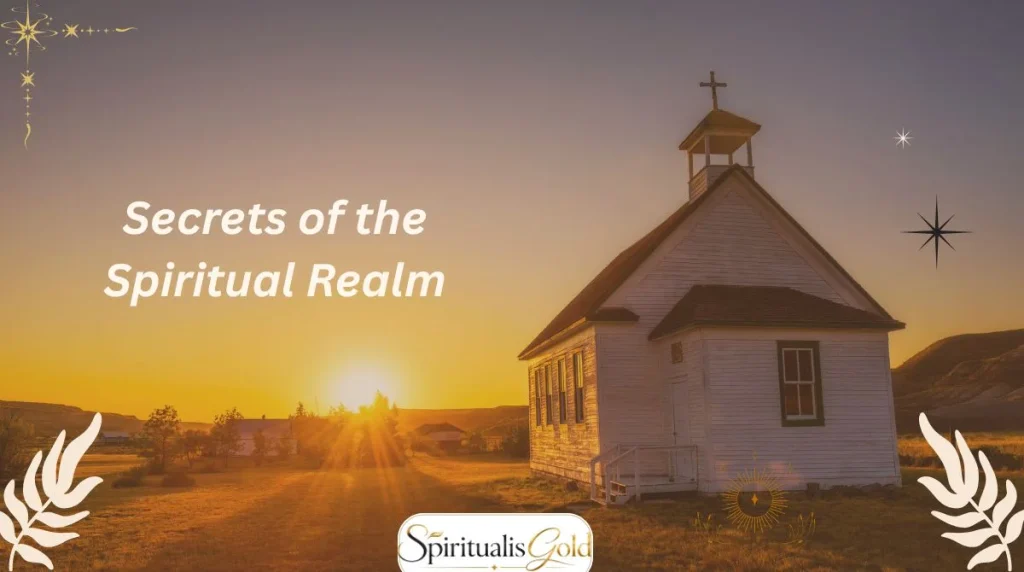
When people talk about the secrets of the spiritual realm, they are often searching for hidden knowledge about God, angels, spiritual protection, and the unseen world. The Bible does contain teachings about spiritual realities, but it also makes clear that not everything about God’s creation has been revealed to humanity.
One important biblical truth is that God’s presence is not limited by human understanding. Isaiah 55:8–9 explains that God’s thoughts and ways are higher than human thoughts and ways. This reminds believers to approach spiritual matters with humility instead of assuming they can understand every mystery.
Another important truth is the power of faith. Hebrews 11:1 describes faith as confidence in what is hoped for and assurance about what is not seen. Faith allows Christians to trust God’s promises even when they cannot immediately understand their circumstances.
The Bible also teaches that spiritual discernment matters. Not every spiritual claim, unusual experience, or message should automatically be accepted as coming from God. First John 4:1 encourages believers to test the spirits rather than believe every spiritual claim.
Perhaps one of the most meaningful lessons is that spiritual maturity is not about discovering secret powers. It is about developing a sincere relationship with God, recognizing truth, practicing forgiveness, and living with love. These are the qualities that make spiritual growth meaningful in everyday life.
Exercises How to Enter the Spiritual Realm and Interact With God
Many people want practical exercises that help them feel closer to God and develop a stronger spiritual connection. Christianity offers several simple practices that encourage prayer, reflection, and awareness of God’s presence. These activities are not supernatural techniques for controlling the spiritual realm. They are ways to strengthen faith and build a meaningful relationship with God.
Practice quiet prayer: Find a peaceful place where you can spend a few minutes speaking honestly with God. Share your worries, express gratitude, and ask for guidance. You do not need perfect words because sincere prayer matters more than impressive language.
Read and reflect on Scripture: Choose a short Bible passage and read it slowly. Consider what it teaches about God’s character and how its message applies to your life. Psalm 23 and Matthew 6:25–34 are meaningful passages for reflection.
Practice Christian meditation: Sit quietly and reflect on a biblical truth, such as God’s love or the promise of His peace. Rather than trying to empty your mind or force a supernatural experience, keep your attention focused on Scripture.
Keep a prayer journal: Write down your prayers, concerns, and moments of gratitude. Over time, reviewing your entries may help you recognize personal growth and remember how you have experienced God’s guidance.
Spend time in worship: Listen to worship music, sing hymns, or read passages of praise. Worship can help you redirect your attention toward God and develop a more grateful heart.
Practice forgiveness and kindness: Spiritual growth is not limited to private prayer. Forgiving others, helping people in need, and treating others with compassion are practical expressions of Christian faith.
Remember that interacting with God does not require hearing a physical voice, seeing a vision, or experiencing unusual sensations. Christians can communicate with God through prayer and understand His teachings through Scripture, wisdom, and the work of the Holy Spirit.
Seven Spiritual Realms
The idea of seven spiritual realms appears in various spiritual traditions and interpretations, but the Bible does not provide one universally accepted list of seven distinct spiritual dimensions. Some people use this expression to describe different levels of spiritual existence, while others connect it with biblical references to heaven and the unseen world.
In Christian discussions, people sometimes explore the following concepts when talking about spiritual realms:
- The earthly realm: The physical world where human beings live, make decisions, build relationships, and experience everyday life.
- The heavenly realm: The dwelling place of God, often described in Scripture as heaven.
- The angelic realm: The existence and activity of angels, who serve God and carry out His purposes.
- The realm of spiritual conflict: The unseen opposition between God’s purposes and evil spiritual forces, discussed in Ephesians 6:12.
- The realm of the human spirit: The inner spiritual life of people, including faith, conscience, and their relationship with God.
- The realm of divine presence: The experience of God’s presence and guidance in the lives of believers.
- The realm of eternal life: The future hope of resurrection and eternal life promised through Jesus Christ.
These descriptions are ways of organizing spiritual ideas, not seven officially established biblical dimensions. It is important to distinguish popular spiritual teachings from what Scripture actually says.
The Bible places greater emphasis on God’s authority over all creation than on identifying different spiritual levels. Colossians 1:16 teaches that all things, visible and invisible, were created through Christ and for Him. This reminds Christians that every aspect of existence remains under God’s authority.
Spiritual Realm vs Physical Realm
The spiritual realm and physical realm are often discussed as two different aspects of existence. The physical realm is the world people experience through their senses, while the spiritual realm refers to invisible realities associated with God, faith, angels, and spiritual matters.
Although these concepts are different, the Bible presents them as connected rather than completely unrelated. A person’s spiritual beliefs can influence physical decisions, relationships, behavior, and the way they respond to difficult situations.
| Spiritual Realm | Physical Realm |
|---|---|
| Associated with invisible spiritual realities | Associated with the visible material world |
| Understood through faith and biblical revelation | Experienced through the five senses |
| Includes discussions of God and angels | Includes people, nature, and physical objects |
| Focuses on faith and spiritual growth | Focuses on everyday activities and responsibilities |
| Encourages prayer and spiritual reflection | Involves practical decisions and actions |
For example, when someone chooses to forgive a person who has hurt them, the decision may come from a spiritual belief, but its effects appear in the physical world. Similarly, prayer may be an invisible act of faith, yet it can influence someone’s attitude, emotional response, and decisions.
Second Corinthians 4:18 encourages believers to focus not only on temporary visible things but also on eternal realities. This does not mean that physical life is unimportant. Instead, it reminds Christians that material possessions, temporary difficulties, and worldly achievements are not the only things that give life meaning.
Ultimately, a balanced Christian life recognizes both spiritual faith and physical responsibility. Believers are called to seek God while also caring for their families, helping others, making wise decisions, and fulfilling their responsibilities. The spiritual realm reminds us that life has a deeper meaning, while the physical realm provides the opportunity to express faith through everyday actions.
People Also Search
spiritual realm in the bible
how to enter the spiritual realm
is the spiritual realm on earth
spirit realm meaning
secrets of the spiritual realm
exercises how to enter the spiritual realm and interact with god
7 spiritual realms
spiritual realm vs physical realm
Frequently Asked Questions
How to Connect With the Spirit Realm?
Connecting with the spirit realm begins with inner peace, self-awareness, and a deeper understanding of your spiritual beliefs. Through prayer, meditation, reflection, and quiet moments, some people seek a stronger connection with the unseen aspects of spiritual life.
How Does the Spirit Realm Work?
The spirit realm is understood differently across religions and spiritual traditions. Some believe it is a dimension beyond the physical world where spirits exist, while others view it as a symbolic way of describing divine presence, consciousness, and the mysteries of existence.
What Happens in a Spiritual Realm?
According to various spiritual beliefs, the spiritual realm is associated with the soul, divine presence, and existence beyond physical life. Some traditions describe it as a place of peace, transformation, or continued existence, although its nature cannot be scientifically confirmed.
Can People See Into the Spirit Realm?
Some people believe that spiritual experiences, dreams, visions, or deep meditation offer glimpses into the spirit realm. However, these experiences are personal and can have different explanations, so they should not automatically be considered proof of supernatural activity.
How to Tell If Someone Is Spiritually Connected to You?
A spiritual connection may feel like a deep sense of understanding, emotional closeness, trust, or shared values. You might feel comfortable around that person without needing many words, but genuine connection is best recognized through mutual respect, honesty, and consistent actions.
How Do I Enter the Spirit Realm?
Different traditions suggest prayer, meditation, contemplation, and spiritual reflection as ways to explore one’s inner spiritual life. Rather than trying to force an unusual experience, focus on developing peace, self-awareness, and a meaningful relationship with your beliefs while staying grounded in everyday reality.
Final Thought
Belief in the spirit realm has given people comfort for thousands of years, long before anyone had a word for faith or spirituality the way we use those words today. Whether you see it as a literal place, a metaphor for the unknown, or something in between, the core of it is the same: a sense that life carries more meaning than what’s visible on the surface. If this topic speaks to you, keep exploring it with curiosity and a clear head, and let it add to your life rather than take you away from the people and world right in front of you.

Riaz Ahmad is the author of SpiritualisGold.com, sharing meaningful spiritual lines, deep words, life lessons, and inspirational thoughts. With 6+ years of experience creating spiritual and reflective content, he aims to help readers find inner peace, wisdom, hope, and a deeper connection with life.