Last updated: October 12, 2026
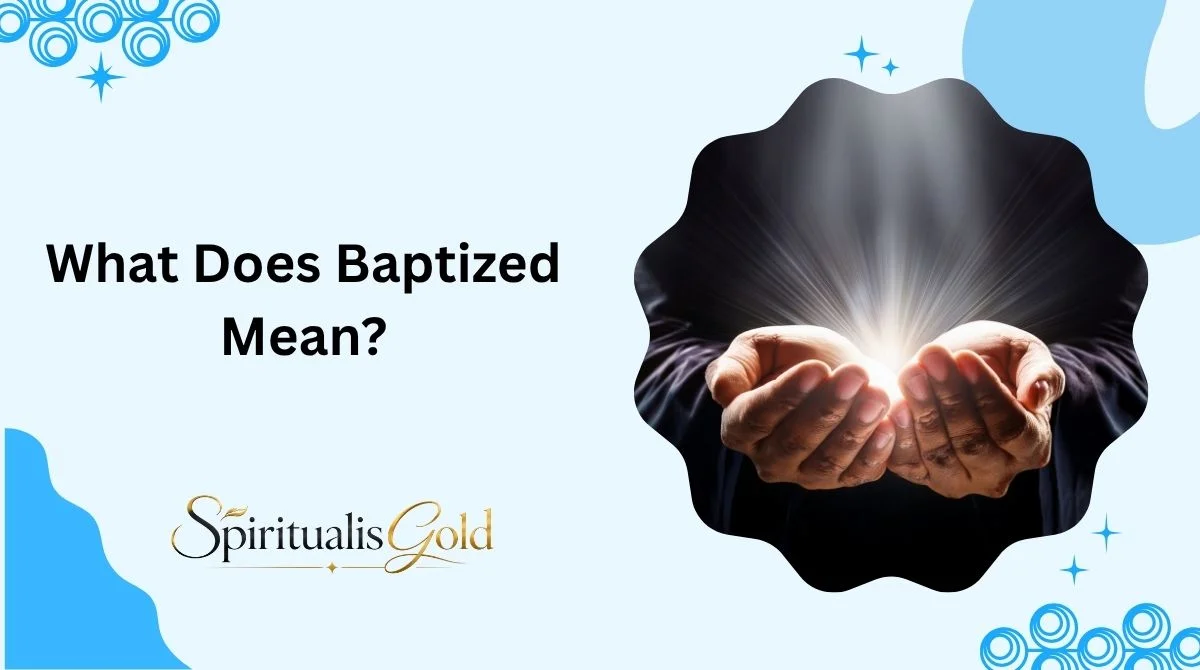
You hear the word at a wedding, in a Bible study, or from a friend who just got dunked in a swimming pool with a pastor standing beside them, cheering. And you find yourself asking a question that feels too basic to say out loud: what does baptized actually mean?
Here’s the direct answer. To be baptized means to go through a ritual, usually involving water, that marks a person’s entry into the Christian faith or their public declaration of faith. The word itself comes from the Greek baptizo, which means “to dip” or “to immerse.” Depending on the church, baptism might involve full immersion in water, water poured over the head, or just a few drops sprinkled on the forehead. The water is a symbol. It represents washing away sin, dying to an old way of living, and rising into a new life tied to Christ.
The Simple Definition, Broken Down
Baptism is a ritual act of initiation into Christianity. Most churches treat it as one of the most important steps a believer can take.
The core idea behind the word hasn’t changed much since the first century. Baptizo meant to dip something into liquid completely. Early Christians adapted the word for a very specific use: dipping a person into water as a sign that they now belonged to a new spiritual family.
Three things are usually happening at once during a baptism, no matter which church performs it:
- A public declaration. The person (or their parents, in infant baptism) is saying, out loud and in front of witnesses, “I belong to this faith.”
- A symbolic cleansing. Water represents the washing away of sin and the start of something new.
- A connection to Jesus’s own story. Many Christians see baptism as a way of symbolically living out Christ’s death, burial, and resurrection. You go under the water (death), you’re submerged briefly (burial), and you come back up (resurrection into new life).
Where the Word and the Practice Come From
Baptism didn’t start with Christianity, even though Christianity is what made it famous.
Jewish ritual washing, known as mikveh, had been part of religious life for centuries before Jesus. People used these ritual baths for purification before entering the temple or after certain life events. When John the Baptist began baptizing people in the Jordan River, he was pulling from a practice his audience already recognized, but he gave it new meaning: a baptism of repentance, preparing people for a coming spiritual shift.
Jesus himself was baptized by John, an event described in all four Gospels. After that, baptism became something his followers were instructed to continue. In the book of Matthew, Jesus tells his disciples to go and baptize people “in the name of the Father, the Son, and the Holy Spirit.” That one line became the foundation for nearly two thousand years of Christian practice.
The Different Ways Churches Baptize
This is where things get interesting, and where a lot of the confusion comes from. Not every church baptizes the same way, and the differences are not small.
Full Immersion
The person is submerged completely underwater, usually in a pool, river, lake, or a baptismal tank built into the church. Baptist, Pentecostal, and many non-denominational churches use this method almost exclusively. They point to the Greek word’s original meaning and to biblical examples like Jesus’s own baptism in the Jordan River.
Pouring (Affusion)
Water is poured over the person’s head three times, often while a pastor or priest says the words “I baptize you in the name of the Father, and of the Son, and of the Holy Spirit.” Many Catholic, Lutheran, and Methodist churches use this method, especially for infants.
Sprinkling (Aspersion)
A small amount of water is sprinkled on the forehead. This is common in some Catholic and Presbyterian settings, particularly for infant baptisms, where full immersion isn’t practical for a newborn.
None of these methods are considered more “real” than the others by the churches that practice them. Each tradition believes its method properly fulfills the symbolic and spiritual purpose of the ritual.
Infant Baptism vs. Believer’s Baptism
This is probably the biggest dividing line in Christian baptism practice, and it comes down to one core question: should a person be baptized as a baby, or only once they’re old enough to choose it for themselves?
Infant baptism is practiced by Catholic, Orthodox, Lutheran, Anglican, and many Presbyterian and Methodist churches. The belief here is that baptism brings a child into the covenant community of faith, similar to how circumcision functioned in the Old Testament as a sign of belonging. Parents and godparents make promises on the child’s behalf, with the expectation that the child will grow into their own faith later, often confirmed through a separate ceremony called confirmation.
Both views are rooted in genuine scripture-based reasoning, and both sides have been arguing their case for centuries. Neither is a fringe position.
Is Baptism Necessary for Salvation?
This question causes more disagreement among Christians than almost any other baptism-related topic, so it’s worth laying out honestly rather than picking a side for you.
Some traditions, including Catholic and Orthodox teaching, hold that baptism is necessary for salvation in a real and direct sense. It’s seen as the moment a person is cleansed of original sin and formally grafted into the body of Christ.
Other traditions, especially many Protestant and evangelical churches, teach that salvation comes through faith alone, and baptism is an important act of obedience and public testimony, but not the mechanism that saves a person. Under this view, a person who dies before they get the chance to be baptized isn’t considered lost because of it.
What Happens Spiritually During Baptism
Setting the denominational differences aside for a moment, most Christians agree on the symbolic meaning underneath the ritual itself.
- Death to an old life. Going under the water represents letting go of a former way of living, including guilt, old patterns, or a life lived apart from faith.
- Burial. The brief moment underwater echoes the burial of Christ, a pause between the old life and the new one.
- Resurrection. Coming back up out of the water represents rising into new life, much like Jesus’s resurrection.
- Belonging. Baptism publicly marks a person as part of the church community, not just a private believer on their own.
- The presence of the Holy Spirit. Many traditions teach that baptism is accompanied by the Holy Spirit entering or strengthening a person’s faith in a real, active way.
A lot of people describe their own baptism as an emotional turning point, even if they can’t fully explain why. Part of that comes from the ritual itself.
What to Expect If You’re Getting Baptized

If you’re considering baptism yourself, here’s generally what the process looks like, though it varies by church.
- A conversation with a pastor or priest. Most churches want to talk with you first, partly to explain their beliefs and partly to make sure you understand what you’re choosing.
- A class or short course. Many churches offer a baptism class, especially for adults, covering the meaning behind the ritual and what’s expected afterward.
- Choosing the date and method. You’ll usually have some say in when it happens and, depending on the church, how.
- The ceremony itself. This can happen during a regular church service or as a separate event, often with family and friends present.
- A time of celebration afterward. Many churches treat baptism as a joyful milestone, not a quiet formality.
Baptism Meaning in the Bible
Baptism is an important practice in the Bible that represents faith in God, repentance from sin, and a person’s commitment to following Jesus Christ. It is more than an outward ceremony; it expresses an inward change in the heart and a desire to live according to God’s teachings. Throughout the New Testament, baptism is closely connected with faith, spiritual renewal, and becoming part of the Christian community.
In Matthew 28:19, Jesus instructed His disciples to baptize people in the name of the Father, the Son, and the Holy Spirit. This command shows that baptism holds a meaningful place in Christian life. It is a public expression of faith and obedience to Christ.
Romans 6:3–4 explains baptism through the picture of Jesus’ death, burial, and resurrection. Going under the water can symbolize dying to an old way of life, while coming out of the water represents new life through Christ. For many Christians, this symbolism serves as a reminder that faith involves turning away from sin and seeking spiritual growth.
Different Christian traditions understand the relationship between baptism, salvation, and faith in different ways.
What Does Being Baptized Mean as a Baby?
Being baptized as a baby means that a child is welcomed into the Christian community through a religious ceremony performed by a priest or minister. In traditions such as Catholicism, Eastern Orthodoxy, and many Anglican churches, infant baptism is an important expression of God’s grace and the beginning of the child’s journey in the Christian faith.
Parents and godparents usually make promises to help the child grow in faith, learn Christian teachings, and develop a relationship with God. Because a baby cannot personally express an understanding of faith, the ceremony reflects the commitment of the family and the church to provide spiritual guidance as the child grows.
In Catholic teaching, baptism removes original sin, brings the child into the life of Christ, and incorporates the child into the Church. It is understood as a sacrament of new birth through water and the Holy Spirit. The child is not expected to understand every aspect of Christian belief at that age; instead, parents and the faith community help nurture the child’s spiritual development.
Other Christian groups, particularly many Baptist and evangelical churches, practice believer’s baptism instead. They generally believe baptism should take place when a person is old enough to understand the message of the gospel and personally profess faith in Jesus Christ. These churches may dedicate infants to God without baptizing them.
Baptism Meaning and Purpose
The meaning and purpose of baptism extend beyond the act of entering water. For Christians, baptism communicates spiritual truths about forgiveness, renewal, obedience, and a new relationship with God. It can be understood as a visible expression of spiritual realities that are central to the Christian faith.
One important purpose of baptism is to express repentance and a turning toward God. In Acts 2:38, Peter connects repentance with baptism in the name of Jesus Christ. This passage highlights the importance of recognizing one’s need for God’s forgiveness and responding to the message of Christ with sincerity.
Baptism also symbolizes new life. Just as water can wash away physical dirt, baptism represents spiritual cleansing and the hope of a renewed heart. However, Christians differ in how they explain this symbolism. Some view baptism primarily as an outward testimony of inward faith, while others understand it as a sacrament through which God works in a person’s spiritual life.
Another purpose is to demonstrate obedience to Jesus. Christians who choose baptism often do so because they believe Christ instructed His followers to observe it. Through this act, they publicly identify themselves with His teachings, death, and resurrection.
Baptism also creates a sense of belonging. It connects believers with a community that shares their faith, worship, and commitment to serving others.
What Does the Word Baptism Mean?
The word baptism refers to a religious act involving water that carries spiritual significance, particularly in Christianity. It is commonly associated with cleansing, repentance, renewal, and identification with Jesus Christ. Although the ceremony may look different across Christian traditions, its meaning is rooted in the relationship between outward action and inward spiritual commitment.
The English word baptism comes through Latin from the Greek word baptisma, which refers to the act of baptizing. The related Greek verb is baptizō, meaning to immerse, dip, or wash, depending on the context in which it is used.
In Christian practice, baptism is not simply about water. It communicates a person’s connection to the Christian faith and, in many traditions, signifies entrance into the Church. For believers who are baptized as an expression of personal faith, it can represent a public declaration that they want to follow Jesus and live according to His teachings.
The meaning also includes the idea of transformation. Baptism often marks a transition from an old way of life toward a new commitment shaped by faith, repentance, and hope. This does not mean that a baptized person becomes perfect or never struggles again. Rather, baptism points toward a continuing journey of spiritual growth.
Understanding the word’s meaning helps explain why baptism has remained significant throughout Christian history.
Baptize Meaning in Greek
The Greek verb commonly translated as baptize is baptizō (βαπτίζω). Depending on its context, it can mean to immerse, dip, or wash. The related noun baptisma (βάπτισμα) refers to baptism as an act or religious practice.
These words appear throughout the New Testament, where baptism is connected with the ministry of John the Baptist, the teachings of Jesus, and the early Christian community. John baptized people as a sign of repentance, preparing them for the coming of God’s kingdom. After Jesus’ resurrection, baptism became an important practice among His followers.
For example, Mark 1:4 describes John proclaiming a baptism of repentance for the forgiveness of sins. Acts 8:38 recounts Philip baptizing an Ethiopian official after they came to water. Such passages illustrate the importance of baptism in the New Testament narrative.
The Greek word is sometimes discussed in debates about whether baptism must involve full immersion, pouring, or sprinkling. Its basic meaning includes dipping or immersing, but the method used in Christian practice has varied across historical traditions.
Understanding the Greek terminology offers valuable insight into the biblical practice of baptism.
Three Reasons Why Baptism Is Important
Baptism is important to Christians for several connected reasons, especially its relationship with obedience, spiritual renewal, and belonging to the Christian community. Although traditions differ in their understanding of baptism’s precise role in salvation, they generally recognize its importance within Christian life.
First, baptism expresses obedience to Jesus Christ. In Matthew 28:19–20, Jesus instructs His disciples to make disciples of all nations and baptize them. For Christians, following this instruction is a meaningful response to Christ’s teachings.
Second, baptism symbolizes cleansing and new life. It points toward forgiveness, repentance, and the hope of spiritual transformation. Romans 6:4 describes believers walking in newness of life through the symbolism of Christ’s resurrection. This message encourages Christians to leave behind destructive habits, seek forgiveness, and develop qualities such as patience, compassion, and honesty.
Third, baptism connects a person with the Christian community. It can mark a person’s entrance into the Church or publicly identify them as a follower of Jesus. Through this connection, believers find opportunities for worship, encouragement, learning, and service. Faith is deeply personal, but Christianity also emphasizes the importance of supporting others and growing together.
These reasons show that baptism is more than a ceremony performed with water. It represents a meaningful commitment to faith, a reminder of spiritual renewal, and a connection to a community built around the teachings of Christ. Its significance becomes clearer when the values it represents continue to shape everyday life.
What Does Baptized Mean in Catholic Religion?
In Catholicism, being baptized means receiving the first sacrament of Christian initiation and being welcomed into the life of the Church. The Catholic Church teaches that baptism brings forgiveness of sins, including original sin, grants new birth through water and the Holy Spirit, and establishes a person’s relationship with Christ and His Church.
Catholic baptism is normally performed by pouring water over the person’s head while saying, “I baptize you in the name of the Father, and of the Son, and of the Holy Spirit.” Immersion may also be used. The essential elements are water and the Trinitarian baptismal formula, together with the intention to perform Christian baptism.
Catholics baptize infants because they believe God’s grace is a gift that does not depend on a child’s ability to understand or explain faith. Parents and godparents promise to support the child’s Christian upbringing so that the child can gradually learn the teachings of Jesus and participate in the life of the Church.
For adults who have not been baptized, preparation usually includes learning about Catholic beliefs, reflecting on the gospel, and preparing to enter the Church. Adults normally profess their faith before receiving baptism.
What Does Baptized Mean in Arabic?
The meaning of baptized in Arabic depends on the context, particularly whether the word is being used in Christian religious language or everyday conversation. In Christian Arabic, baptism is commonly called المعمودية (al-maʿmūdiyya), while the verb “to baptize” is often expressed as عمَّدَ (ʿammada).
The word مُعَمَّد (muʿammad) can mean “baptized” when referring to a person who has received the Christian sacrament of baptism. For example, the Arabic expression أنا مُعَمَّد can mean “I am baptized,” when spoken by a male. A female may say أنا مُعَمَّدة to express “I am baptized.”
In Arabic-speaking Christian communities, baptism carries meanings similar to those found in other Christian traditions. It is associated with spiritual cleansing, new life in Christ, and membership in the Christian Church. The precise theological meaning depends on the denomination, including whether baptism is understood primarily as a sacrament, an expression of faith, or both.
It is important to distinguish the Arabic Christian term from Islamic religious terminology. Islam does not practice Christian baptism as a sacrament, although Islamic traditions include their own teachings about purification, repentance, and spiritual responsibility.
Understanding the Arabic terminology can help readers explore biblical teachings across languages and cultures.
People Also Search
baptism meaning in bible
what does being baptized mean as a baby
baptism meaning and purpose
what does the word baptism mean
baptize meaning in greek
3 reasons why baptism is important
what does baptized mean in catholic religion
what does baptized mean in arabic
Frequently Asked Questions
Why do people get baptized for?
People get baptized to express their faith in God, follow the example of Jesus Christ, and publicly declare their commitment to a spiritual life. For many Christians, baptism symbolizes forgiveness, spiritual renewal, and the beginning of a closer relationship with God.
What happens when a person is baptized?
During baptism, a person receives water through immersion, pouring, or sprinkling, depending on the Christian tradition. Spiritually, baptism represents cleansing from sin, new life in Christ, and a commitment to walk in faith, love, and obedience to God.
Can you go to heaven without being baptized?
Many Christians believe that salvation comes through God’s grace and faith in Jesus Christ, while baptism is an important act of obedience and faith. Christian traditions differ on its necessity, but many emphasize that God’s mercy cannot be reduced to a single outward act.
What is the difference between “baptized” and “baptised”?
There is no difference in meaning between “baptized” and “baptised.” Baptized is the standard American English spelling, while baptised is commonly used in British English and other varieties of English. Both describe the same Christian religious practice.
Why can’t you be baptized twice?
Many Christian traditions teach that baptism should happen only once because it represents a lasting commitment to Christ and entry into the Christian faith. However, practices differ among denominations, and some churches baptize people again if their earlier baptism does not meet their understanding of biblical baptism.
Is there a color you shouldn’t wear to a baptism?
There is generally no universal color that you must avoid when attending a baptism. White, blue, beige, and other modest colors are common choices, while respectful clothing is more important than following a strict color rule. When in doubt, consider the family’s wishes and the church’s customs.
Final Thought
Baptism has carried real weight in Christian life for close to two thousand years, and that’s not an accident. Whatever your tradition teaches about the exact mechanics of it, the heart of the ritual stays consistent: an old life ending, a new one beginning, and a community standing there to witness it. If you’re still working through what it means for you personally, talking to a pastor or mentor in your own tradition is a far better next step than guessing. This is one of those moments in faith worth getting right, not rushed.

Riaz Ahmad is the author of SpiritualisGold.com, sharing meaningful spiritual lines, deep words, life lessons, and inspirational thoughts. With 6+ years of experience creating spiritual and reflective content, he aims to help readers find inner peace, wisdom, hope, and a deeper connection with life.