Last updated: October 5, 2026
Maybe you heard someone at church say “everyone has a gift,” and you wondered if that included you. Or maybe you spent an evening searching for spiritual gifts verses and ended up with six tabs open and no clearer answer. That feeling is common, and it’s why this guide exists.
Spiritual gifts verses are the Bible passages that describe the abilities God gives followers of Christ to serve other people and build up the church. The main passages are 1 Corinthians 12 to 14, Romans 12:6-8, Ephesians 4:11-12, and 1 Peter 4:10-11. Each one names gifts or explains how they work, and each points to the same goal: helping others, not impressing them.
This article walks through the key verses, explains each gift in plain language, and shows how people apply these passages in daily life. I’ll also note where Christian traditions read these verses differently, because they do.
The Quick Answer: What These Verses Teach
The spiritual gifts passages make three core points. Every believer receives at least one gift. The gifts come from the Holy Spirit, not from personal effort or social status. And the gifts exist for the common good, meaning they benefit the whole community.
- Every believer has a gift. First Peter 4:10 says each person has received one.
- The Spirit gives them. Gifts aren’t earned, bought, or ranked by personal worth.
- They serve others. A gift that only makes its owner feel important misses the point.
The Key Passages
1 Corinthians 12:4-11: The Most Detailed List
Paul wrote this section to a church in Corinth that had a problem. Some members prized dramatic gifts, especially speaking in tongues, and looked down on people whose gifts seemed quieter. Paul corrected them with an image: the church is one body, and every part matters.
Verse 7 says that a manifestation of the Spirit is given to each person for the common good. Verse 11 adds that one and the same Spirit distributes gifts to each person as the Spirit decides. That line matters a lot. You don’t choose your gift from a menu, and you don’t need to measure yourself against someone else.
The list in verses 8-10 includes wisdom, knowledge, faith, healing, miraculous powers, prophecy, distinguishing between spirits, different kinds of tongues, and the interpretation of tongues. Churches disagree about how some of these operate today, so many readers start with the shared purpose behind the list rather than the specific gifts.
Romans 12:6-8: Gifts You See in Everyday Life
Paul’s list in Romans is shorter and feels more practical. It names prophecy, serving, teaching, encouraging, giving, leading, and showing mercy. Most of these happen in ordinary places: a kitchen, a classroom, a hospital hallway, a small group meeting in someone’s living room.
The passage also says to use each gift according to the grace given. That phrase suggests gifts come as God’s undeserved favor. People should use them with humility, not pride.
Ephesians 4:11-12: Gifts for Building Up the Church
This passage names apostles, prophets, evangelists, pastors, and teachers. It says these leaders equip God’s people for works of service, so that the body of Christ grows strong. Many churches read this passage as describing leadership roles. Others see it as a picture of gifted leaders preparing the whole congregation to serve.
1 Peter 4:10-11: Serve With What You Have
Peter’s words are short and direct. Each person has received a gift, and each should use it to serve others as a faithful manager of God’s grace. He then splits gifts into two broad groups. Speaking should sound like God’s own words. Serving should be done with strength God provides.
The passage ends with its purpose: that God receives glory through Jesus Christ. This ending keeps the focus on God, not on the person using the gift.
Spiritual Gifts vs. the Fruit of the Spirit
Galatians 5:22-23 lists love, joy, peace, patience, kindness, goodness, faithfulness, gentleness, and self-control. People often mix these up with spiritual gifts, but they’re different.
Gifts are abilities used for service. The fruit is character that grows over time. A person can have a strong gift of teaching and still struggle with patience. Many Christians see both as essential, and both come from the Spirit. A gift without character can cause harm, while character without a gift can leave a person feeling unsure where to serve.
What Paul Says Matters Most: Love
First Corinthians 13 comes right after the gifts section, and that placement is intentional. Paul says that even the most impressive gifts count for little without love. He describes love as patient, kind, not envious, not boastful, and not rude.
Many readers say this chapter changed how they think about their gifts. Someone with a gift of teaching who speaks harshly causes damage. Someone with a quiet gift of mercy who acts with love builds the church. The gift matters, but the love behind it determines whether it helps anyone.
How to Find Your Spiritual Gift

You don’t need a dramatic moment to discover your gift. Most people find it through steady, ordinary practice. These steps work well for most people:
- Read the passages slowly. Write down the gifts that stand out to you, even if they seem unlikely.
- Notice what energizes you. Pay attention to tasks where you lose track of time and feel more alive afterward.
- Ask people who know you well. Trusted friends often see strengths you overlook.
- Try serving in small ways. Help with a kids’ class, bring a meal to a neighbor, or staff the welcome table at church.
- Reflect and pray. Keep a simple journal of what you tried, how it went, and how you felt afterward.
- Talk with a pastor or mentor. Many churches offer spiritual gifts classes or assessments.
In my experience, the clearest signs show up after you serve, not before. Plenty of people wait for a big feeling or a flash of certainty. Most who find their gift do it by trying something, paying attention, and adjusting over time.
Common Misunderstandings
Several ideas about spiritual gifts come up again and again, and some of them don’t match the text.
- A gift has to feel dramatic. Romans 12 lists gifts like giving and mercy, which often happen quietly.
- If I’m not visibly gifted, I don’t have one. First Peter 4:10 says each believer has received a gift. Your gift may simply look different than you expected.
- Gifts prove someone is more spiritual. Paul corrects this idea directly in 1 Corinthians 12 and 13. Gifts are for serving others, not for status.
- Gifts are only for church leaders. Ephesians 4 names leaders, but Romans 12 and 1 Peter 4 describe gifts for every believer.
Christian traditions also differ on whether certain gifts, especially miraculous gifts and tongues, continue today. Some traditions, called cessationist, say those gifts ended with the early church. Others, called continuationist, say they continue. Both views appear in serious, respected churches. If you’re unsure what your church teaches, ask your pastor. Good teachers can explain their reasoning clearly, and you can explore the question with humility.
What Are the 7 Spiritual Gifts Bible Verse
The Bible presents spiritual gifts as special abilities given by God to believers for serving others and strengthening the body of Christ. While the Bible does not provide one single list officially called “the seven spiritual gifts,” several passages describe different gifts. Romans 12:6–8, 1 Corinthians 12:4–11, and Ephesians 4:11–13 are especially important when studying this subject.
Romans 12 mentions gifts such as prophecy, service, teaching, encouragement, giving, leadership, and mercy. These gifts show that God equips people differently. A person may be naturally compassionate, while another may be gifted in teaching or guiding others. Each ability has value when it is used with humility and love.
The deeper lesson is that spiritual gifts are not given for personal status. They are meant to help others and glorify God. First Peter 4:10 encourages believers to use whatever gift they have received to serve one another as faithful stewards of God’s grace.
9 Gifts of the Holy Spirit Bible Verse
The nine gifts of the Holy Spirit are commonly identified from 1 Corinthians 12:8–10. Paul describes them as the word of wisdom, word of knowledge, faith, gifts of healing, working of miracles, prophecy, discerning of spirits, different kinds of tongues, and interpretation of tongues.
These gifts demonstrate the variety of ways the Holy Spirit can work through believers. Wisdom may provide direction in a difficult situation, while knowledge can bring understanding that a person could not have gained through ordinary circumstances. Faith can give remarkable confidence in God’s power, and healing and miracles point people toward God’s authority.
Prophecy involves speaking a message that builds up, encourages, or comforts God’s people. Discernment helps distinguish between spiritual influences, while tongues and their interpretation are discussed together in the context of the gathered church.
The important point is found in the surrounding passage: these gifts come from the same Spirit and are distributed according to His will. They are not proof that one believer is more valuable than another.
Bible Verses About Gifts and Talents
The Bible frequently connects gifts, abilities, stewardship, and responsibility. One of the clearest teachings appears in Matthew 25:14–30, where Jesus tells the parable of the talents. Servants receive different amounts from their master, and each is expected to use what has been entrusted to them faithfully.
This parable teaches that God cares about how people use what they have been given. The issue is not whether someone possesses more ability than another person. Instead, faithfulness matters. A person with a small opportunity can honor God just as sincerely as someone with a larger platform.
First Peter 4:10 also teaches believers to use their gifts in serving others. Exodus 31:1–6 shows another dimension of God’s gifting, where Bezalel is equipped with skill and understanding for craftsmanship connected with the tabernacle.
These passages remind us that talents should not be buried through fear, comparison, or insecurity. Whether someone’s strength is teaching, creating, encouraging, organizing, serving, or helping others, it can become meaningful when surrendered to God.
List of Spiritual Gifts Bible Verse

Several passages provide lists of spiritual gifts, and each list highlights a different aspect of Christian service. Romans 12:6–8 includes prophecy, service, teaching, encouragement, giving, leadership, and mercy. First Corinthians 12:8–10 describes nine manifestations of the Spirit, including wisdom, knowledge, faith, healing, miracles, prophecy, discernment, tongues, and interpretation.
Ephesians 4:11 mentions apostles, prophets, evangelists, pastors, and teachers, emphasizing roles that equip believers for ministry. These passages should not necessarily be treated as one fixed master list. Together, they reveal the broad variety of ways God equips His people.
The diversity is meaningful. A church does not need everyone to have the same ability. One person may teach, another may encourage, another may serve quietly, and another may provide leadership. When these gifts work together with love, the community becomes stronger.
Romans 12:6 begins with the thought that gifts differ according to God’s grace. This helps believers avoid unhealthy comparison. Spiritual gifting is ultimately about faithful service rather than recognition.
9 Gifts of the Holy Spirit Bible Verse KJV
The King James Version describes the gifts of the Holy Spirit in 1 Corinthians 12:8–10. The passage speaks of the “word of wisdom,” the “word of knowledge,” “faith,” “gifts of healing,” “working of miracles,” “prophecy,” “discerning of spirits,” “divers kinds of tongues,” and “the interpretation of tongues.”
The KJV wording has become especially familiar among Christians who study traditional biblical language. Each gift is presented within Paul’s larger teaching about the body of Christ. Different believers receive different gifts, but all are connected to the same Spirit.
Paul’s purpose was not simply to create a fascinating list of supernatural abilities. He wanted the Corinthian believers to understand that spiritual gifts should operate in an orderly and loving way. In the following chapter, First Corinthians 13 places love at the center of Christian life.
This gives the gifts a deeper meaning. Even remarkable spiritual abilities lose their proper purpose when they are separated from love, humility, and concern for others.
Using God’s Gifts Bible Verse
Using God’s gifts is closely connected with stewardship. First Peter 4:10 says that believers should use whatever gift they have received to serve one another as good stewards of God’s grace. This means a spiritual gift is not simply something to admire; it is something to practice responsibly.
Romans 12:6–8 similarly encourages believers to exercise their gifts according to what God has given them. Someone who teaches should teach faithfully. Someone who gives should give generously.
The principle is simple but profound: what God gives is meant to become a blessing beyond ourselves. A gift becomes more meaningful when it is used to encourage someone who is discouraged, teach someone who is searching for truth, help someone in need, or strengthen a community.
Using God’s gifts also requires humility. People can easily become focused on recognition, but biblical stewardship directs attention back to the Giver. The goal is not to make ourselves appear important but to faithfully reflect God’s grace through our lives.
What Are the 12 Spiritual Gifts in the Bible
The Bible does not give one universally accepted list of exactly twelve spiritual gifts. Instead, different passages identify different gifts and ministry roles. Some Christian traditions combine the lists from Romans 12, First Corinthians 12, Ephesians 4, and related passages to create broader groupings.
Depending on the tradition, a list of twelve may include wisdom, knowledge, faith, healing, miracles, prophecy, discernment, tongues, interpretation, teaching, encouragement, and leadership. Other traditions may organize the gifts differently or include service, mercy, giving, evangelism, or administration.
This difference is important because it prevents readers from assuming that every biblical scholar or Christian tradition understands the lists in exactly the same way. Scripture gives several descriptions rather than presenting a single numbered catalog of twelve.
The central message remains consistent: God equips His people in different ways, and those gifts are intended for faithful service. The value of a gift is not determined by how dramatic it appears. Quiet acts of mercy, encouragement, teaching, and service can have an enormous spiritual impact.
Gifts of the Holy Spirit Bible Verse Isaiah
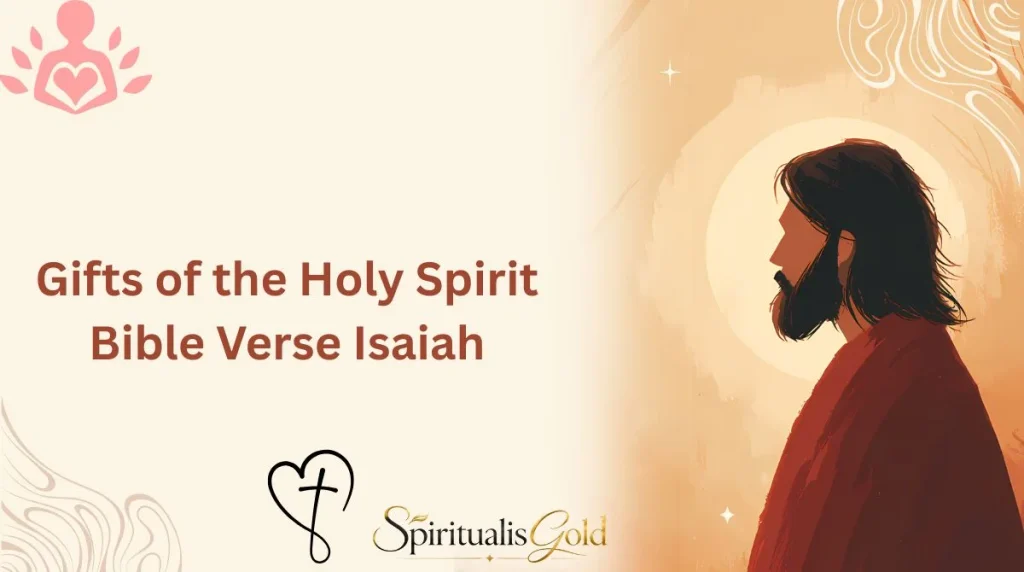
Isaiah provides an important biblical passage about the Spirit’s work in Isaiah 11:2. Speaking about the coming Messiah, the prophet describes the Spirit of the LORD resting upon Him, including the spirit of wisdom and understanding, counsel and might, knowledge and the fear of the LORD.
This passage is especially significant because it connects the Spirit with qualities that reflect God’s character. Wisdom, understanding, counsel, strength, knowledge, and reverence for God are not presented merely as impressive abilities. They describe a life directed by God’s Spirit.
Isaiah 11:2 is sometimes connected with discussions of the “sevenfold” work or gifts of the Spirit, particularly in Christian tradition. However, readers should distinguish this passage from Paul’s lists of spiritual gifts in Romans 12 and First Corinthians 12. Isaiah is describing the Spirit resting upon the Messiah, while Paul’s letters discuss gifts given within the life and ministry of the church.
Together, these passages create a richer picture of spiritual gifting. God’s Spirit equips, guides, strengthens, and empowers people for His purposes. The ultimate goal is not simply to identify a particular gift but to live faithfully, serve others, and allow God’s work to be reflected through one’s life.
People Also Search
what are the 7 spiritual gifts bible verse
9 gifts of the holy spirit bible verse
bible verses about gifts and talents
list of spiritual gifts bible verse
9 gifts of the holy spirit bible verse kjv
using god’s gifts bible verse
what are the 12 spiritual gifts in the bible
gifts of the holy spirit bible verse isaiah
Frequently Asked Questions
How to Use Spiritual Gifts in Bible Verses?
Spiritual gifts are meant to strengthen others, serve faithfully, and glorify God rather than elevate ourselves. Scripture encourages believers to use their gifts with humility, love, wisdom, and a genuine desire to build up the community.
What Are the 7 Spiritual Gifts in Scripture?
The seven commonly recognized gifts are wisdom, understanding, counsel, fortitude, knowledge, piety, and fear of the Lord. These are traditionally associated with Isaiah 11:2–3 and describe qualities that help believers live faithfully and discern God’s purposes.
How Do I Figure Out What My Spiritual Gift Is?
Begin by prayerfully examining what comes naturally to you, where you consistently help others, and what kind of service brings lasting spiritual fruit. The confirmation of mature believers and your willingness to serve can also reveal gifts that may otherwise remain unnoticed.
What Are 5 Spiritual Gifts?
Five examples include teaching, encouragement, leadership, mercy, and giving. Each gift serves a different purpose, but none is insignificant when practiced with love and directed toward helping others grow.
What Is the Strongest Spiritual Gift?
There is no single spiritual gift that makes one believer spiritually superior to another. Scripture places love above every gift, reminding us that the value of a gift is measured by how faithfully and lovingly it is used.
What Are 7 Signs That I Might Be Spiritually Gifted?
You may notice a deep desire to serve, unusual compassion, spiritual discernment, wisdom in difficult situations, an ability to encourage others, meaningful influence, or consistent fruit from your service. A genuine gift usually becomes clearer through faithful use rather than self-promotion.
The Bottom Line
Spiritual gifts verses point to one truth: God gives people abilities so they can serve others. Your gift doesn’t need to impress anyone. It needs to help someone, and it works best when love guides it.
This week, choose one passage, read it three times, and look for one small way to serve. Maybe that means encouraging a friend, teaching a child, or offering help without being asked. You probably have more to offer than you think.

Riaz Ahmad is the author of SpiritualisGold.com, sharing meaningful spiritual lines, deep words, life lessons, and inspirational thoughts. With 6+ years of experience creating spiritual and reflective content, he aims to help readers find inner peace, wisdom, hope, and a deeper connection with life.