Last updated: 19 September 2026
You made a mistake you can’t undo. Or you hit a wall you couldn’t climb alone. Then, out of nowhere, someone forgave you, helped you, or something eased at the exact moment you needed it. You didn’t earn it. You couldn’t have. And now you’re wondering what just happened.
That feeling has a name. The spiritual meaning of grace is receiving love, help, or forgiveness that you did not earn and could not buy. Most traditions see it as a gift from a higher source, whether you call that God, Spirit, the Divine, or the universe.
In this guide, I’ll explain grace in plain words, show how major faiths describe it, and share signs of grace in everyday life. You’ll also learn how to practice it and why so many people link grace with angel number 1010.
The Short Answer: Grace Is a Gift You Don’t Earn
Grace is unearned kindness from a source greater than you. It arrives without a price tag and without a test you must pass first.
Three ideas show up again and again, whatever the tradition:
- It is unearned. You can’t work your way into it, and you can’t lose it by being imperfect.
- It is freely given. Nothing is demanded in return, though many people feel moved to pass it on.
- It brings something real. Usually that’s forgiveness, strength, peace, or well-timed help.
When I first started studying the spiritual meaning of grace, I expected a heavy, churchy idea. What I found was much simpler. Grace is what’s left when you stop keeping score.
The word itself comes from the Latin gratia, which means favor, kindness, or thanks. That root is why “grace” and “gratitude” sound so alike.
Grace, Mercy, Karma, and Luck: What’s the Difference?
These ideas get mixed up all the time. Here’s a clean way to tell them apart.
- Grace vs. mercy: Mercy means you don’t get a punishment you deserved. Grace means you receive a gift you didn’t deserve. Many teachers describe mercy as the pardon and grace as the present.
- Grace vs. karma: Karma is cause and effect. What you do shapes what returns to you. Grace sits beside that law as a kindness that isn’t a payment. Some devotional traditions in Hinduism teach that divine grace can soften the weight of karma.
- Grace vs. luck: Luck is random. Grace feels personal, as if the help was meant for you, even when you can’t prove where it came from.
Keeping these apart helps when you read other articles on the topic. Writers often use the words as if they mean the same thing, and they don’t.
How Different Traditions Understand Grace
Grace doesn’t belong to one religion. The spiritual meaning of grace shifts a little from faith to faith, but the heart of it overlaps.
Grace in Christianity
Grace is central in Christianity. The New Testament word is charis, usually translated as unearned favor. Ephesians 2:8-9 describes salvation as a gift, not something a person earns through effort.
In 2 Corinthians 12, Paul prays for a personal hardship to be removed. He hears the reply, “My grace is sufficient for you.” Grace, in that story, isn’t an escape from struggle. It’s strength inside it.
Catholic teaching describes grace as a share in God’s own life and uses the phrase “state of grace” for friendship with God. Many Protestant traditions stress that grace alone, not effort, brings salvation.
The hymn “Amazing Grace” was written by John Newton, a former slave ship captain turned clergyman. It is about receiving forgiveness he felt he never deserved.
Grace in Judaism
Hebrew has two key words. Chen means favor or grace, as when Noah “found favor” in Genesis 6:8. Chesed means loving-kindness, the steady care God is said to show and that people are asked to show each other.
Jewish teaching often ties grace to action. Receiving kindness is meant to lead you to give it.
Grace in Islam
Islam speaks of God’s mercy (rahma) and bounty (fadl). Every chapter of the Qur’an but one opens with a phrase that calls God “the Most Gracious, the Most Merciful.” Muslims also say it before many daily activities.
In this view, everything good in your day, from breath to food to guidance, is a gift you didn’t create.
Grace in Hinduism and Sikhism
In Hinduism, grace is called kripa. Devotional paths, known as bhakti, teach that surrender to a deity or teacher opens you to divine grace. The word prasada means a gracious gift, and it’s also the name for blessed food shared at temples.
In Sikhism, grace (nadar, a glance of kindness) plays a leading role alongside devotion and honest living. Teachings say that effort matters, but grace is what completes it.
Grace in Buddhism
Buddhism doesn’t center on a gift from a creator, so “grace” isn’t the usual word. Many schools stress personal effort and awareness.
The closest match is compassion (karuna). In Pure Land Buddhism, followers rely on the vow of Amida Buddha, an idea often called “other power.” Many scholars compare it to grace.
Grace in Everyday Language
You already use this word in daily life, and each use points back to the same root idea. Here’s how the spiritual meaning of grace hides inside common phrases:
- Saying grace means giving thanks before a meal. It’s a small habit of receiving on purpose.
- A grace period is extra time given kindly before a penalty applies. You didn’t earn the extra days, and you got them anyway.
- Grace under pressure describes staying steady and kind when life gets hard. Many people see that steadiness as grace working through them.
- Graceful describes ease and beauty, close to the delight the Greek word charis carried.
Signs of Grace in Everyday Life
Signs of grace are moments of unearned help, forgiveness, or calm that arrive when you need them. Grace isn’t always dramatic. A lot of readers tell me it shows up quietly. Here are the signs people describe most often:
- Help arrives at the right moment. A call, a stranger, or a message appears when you were at the end of your rope.
- You get a second chance. Someone forgives you, or you forgive yourself, after something you thought was beyond repair.
- Calm appears in the middle of chaos. You feel steady when you expected to fall apart.
- You find strength you didn’t know you had. You get through a brutal day and wonder how.
- Kindness comes from nowhere. A neighbor, coworker, or stranger does something generous for no reason.
- Timing lines up. Things fall into place in a way you couldn’t have planned.
None of this is proven in a scientific sense. Grace is a way of seeing, and belief shapes what you notice. Still, noticing can change how a hard season feels, and many people find that worth something.
Grace, Gratitude, and Forgiveness

These three often travel together, so it helps to see how they connect.
Grace is the gift. It comes first, before you’ve done anything to deserve it.
Gratitude is the response. It’s the quiet thank you that follows. Many people find that gratitude makes grace easier to spot, because you can only notice what you’re looking for.
Forgiveness is grace passed on. When you forgive someone who hasn’t earned it, you become a small channel for the same kindness you’ve received. Forgiving doesn’t mean you approve of what happened, and it doesn’t mean you must stay close to someone who hurt you. It means you stop carrying the weight of it.
In my experience, people who practice all three tend to hold their lives more loosely and their relationships more warmly.
Grace and Angel Number 1010
Angel number 1010 is a repeating sequence people often spot as 10:10 on a clock or receipt. In angel number teaching, the digit 1 stands for new beginnings and taking the first step. The digit 0 stands for wholeness and a link to the divine, and it amplifies the number beside it. Together, 1010 is commonly read as a sign of alignment and a fresh start.
That’s where it meets grace. Many readers tell me they notice 1010 right after they stop forcing an outcome. In that reading, the number is a reminder that help and timing are already moving in your favor. It invites you to open your hands. Some readers pair a 1010 sighting with the grace log described below, writing down where they were and what they were thinking when the number appeared.
Angel numbers are a matter of belief and interpretation, not science. If 1010 keeps showing up for you, try this. Pause, take one slow breath, and ask where you’ve been gripping too tightly. Then take one small step and stay open to help.
Why Grace Is So Hard to Accept
Most people struggle with grace because receiving without earning feels unnatural. I’ve seen it in myself and in many readers. We’re taught that good things come from hard work, so free gifts make us uneasy.
That unease usually has three roots:
- Shame. You feel you haven’t done enough, or you’ve messed up too much.
- Control. Accepting help means admitting you can’t do everything alone.
- Debt thinking. You feel you must repay every kindness right away.
Grace works against all three. It treats you as worth caring for before you’ve proved anything. That can feel strange at first, and that’s normal.
It also helps to know what grace is not. Grace doesn’t excuse hurting others, and it doesn’t erase the need to make things right. Most traditions teach that real grace makes you kinder, not careless.
And if you’re in a painful season and can’t feel any grace, that doesn’t mean you’ve been left out. Grace can be hard to see when you’re hurting. If things feel heavy, talk with someone you trust.
How to Receive and Practice Grace
You can’t force grace, but you can make room for it. These small habits help:
- Notice one unearned good thing each day. A free parking spot counts. So does a kind text. Say a quiet thank you.
- Keep a three-line grace log. Before bed, write what you received, who helped, and what surprised you. When I started doing this, I began spotting help within a few weeks that I would have missed before.
- Say yes to help. Next time someone offers, skip the “I’m fine” and accept.
- Forgive one small thing. Start with something minor, aimed at someone else or at yourself. Say it out loud: “I let this go.”
- Extend grace to someone. Let a driver merge. Hold back the sharp reply. Give someone a break they haven’t earned.
- Pause before you push. When you hit a wall, sit quietly for two minutes. Pray, breathe, or just listen.
Pick one and try it for a week. Grace tends to grow when you practice giving and receiving together.
A Three-Minute Grace Meditation
- Sit comfortably and take three slow breaths.
- Think of one time someone helped you when you hadn’t earned it or even asked.
- Let the warmth of that memory settle in your chest.
- Silently say, “I am allowed to receive.”
- End by thinking of one person who could use a little grace from you today.
This isn’t a ritual you have to get right. Even one minute counts.
Full Meaning of Grace
Grace is one of the most meaningful ideas in Christianity. In simple words, grace means receiving God’s undeserved favor, kindness, and love. It is not something a person can earn through good behavior, wealth, status, or personal achievement. Grace reflects God’s willingness to give, forgive, restore, and help people even when they do not deserve it.
In the Bible, grace is closely connected with God’s character. It shows that God does not relate to humanity only according to what people deserve. Instead, He offers mercy, forgiveness, strength, and salvation. Christian teaching especially connects grace with salvation through Jesus Christ, emphasizing that salvation is God’s gift rather than something earned by human works.
Grace can also be understood as God’s help in everyday life. A person may experience grace when receiving strength during a difficult season, wisdom when facing an important decision, forgiveness after failure, or peace during uncertainty. Grace therefore is not limited to one moment of conversion. It can shape a believer’s entire relationship with God.
Best Examples of Grace in the Bible
The Bible contains many stories that illustrate grace through forgiveness, restoration, protection, and undeserved favor. One of the clearest examples is Noah. Genesis describes Noah as finding favor in the eyes of the Lord before the flood. His story demonstrates God’s favor and His preservation of life during a period of widespread wickedness.
The story of David also provides a powerful picture of grace. David committed serious sins, including adultery with Bathsheba and arranging circumstances that led to Uriah’s death. Yet when David confessed his sin, he sought God’s forgiveness rather than hiding from Him. His story does not make his actions insignificant; instead, it shows that genuine repentance can be met with divine mercy.
The parable of the prodigal son offers another memorable picture of grace. The younger son leaves home, wastes his inheritance, and eventually returns ashamed. His father welcomes him with compassion rather than treating him according to his failures. Jesus uses this story to communicate the joy of restoration and the depth of God’s mercy toward repentant people.
The greatest Christian example of grace is found in Jesus Christ. The New Testament presents Christ’s death and resurrection as central to God’s saving work. Through Christ, believers understand grace not merely as an abstract idea but as God’s gift of reconciliation, forgiveness, and new life.
Three Types of Grace in the Bible
The Bible does not provide one official list containing exactly three categories of grace. However, Christian theology commonly describes grace in several ways to help explain how God works in human life.
One useful understanding is saving grace. This refers to God’s undeserved gift of salvation through faith in Jesus Christ. Ephesians 2:8–9 emphasizes that salvation is by grace through faith and is not something people can boast about as though they had earned it.
Another is sanctifying grace, a term commonly used in Christian theology for God’s continuing work in transforming believers. Grace is not only associated with becoming a Christian; it is also connected with spiritual growth, obedience, character, and becoming more Christlike.
A third is sustaining grace. This describes God’s continuing strength and help during weakness, suffering, temptation, uncertainty, and difficult circumstances. Paul’s experience in 2 Corinthians 12:9 is often connected with this idea, where God tells him, “My grace is sufficient for you.”
These categories help explain different aspects of grace, but they should not be treated as a complete biblical classification. The Bible presents grace as a rich and wide-ranging reality in the relationship between God and humanity.
Types of Grace With Bible Verses
Grace appears throughout Scripture in different contexts. Saving grace is highlighted in Ephesians 2:8–9, where salvation is described as a gift of grace received through faith. This passage reminds believers that salvation is not a personal achievement.
Abundant grace appears in Romans 5:20, which explains that where sin increased, grace increased even more. The verse points toward the overwhelming power of God’s grace in the face of human sin.
Sustaining grace can be understood through 2 Corinthians 12:9, where God’s grace is described as sufficient in human weakness. This offers encouragement to people who feel unable to handle their circumstances through their own strength.
Serving grace is reflected in 1 Peter 4:10, which encourages believers to use their gifts to serve one another as good stewards of God’s varied grace. Here grace is connected with abilities and opportunities used for the benefit of others.
Giving grace is reflected in 2 Corinthians 9:8, which speaks about God making grace abound so that believers can have what they need for good works. Grace therefore can influence generosity and practical service.
Grace for spiritual growth is emphasized in 2 Peter 3:18, where Christians are encouraged to grow in the grace and knowledge of Jesus Christ. This shows that grace is connected with an ongoing journey rather than a single event.
Hebrew Meaning of Grace
The Old Testament uses several Hebrew words that contribute to the biblical idea of grace. One important word is chen, commonly associated with favor, graciousness, or acceptance. It can describe finding favor in the sight of another person, including God.
Another significant Hebrew concept is chesed, often translated as lovingkindness, steadfast love, mercy, or covenant faithfulness. Although chesed is not simply identical to the Christian theological definition of grace, it helps reveal the richness of God’s faithful and compassionate character in the Old Testament.
The idea of grace in Hebrew Scripture therefore includes more than a simple definition such as “kindness.” It can involve favor, compassion, loyalty, mercy, and God’s faithful relationship with His people.
When reading biblical words in their original languages, context matters. A single English word such as “grace” can represent several related Hebrew concepts, so understanding the surrounding passage provides a fuller picture.
Importance of Grace in the Bible
Grace is important because it explains something fundamental about the biblical understanding of God: He is compassionate, generous, and willing to show favor to people who cannot claim that favor as something they have earned.
Grace is especially important to the Christian understanding of salvation. Ephesians 2:8–9 teaches that people are saved by grace through faith rather than by works. This places God’s generosity at the center of salvation and removes the idea that human beings can earn redemption through personal achievement.
Grace also changes how believers understand failure. Biblical grace does not mean that sin is unimportant or that people never need to take responsibility for their actions. Instead, it provides a path toward repentance, forgiveness, restoration, and transformation.
Grace also influences relationships with other people. Someone who understands that they have received undeserved mercy may become more willing to forgive, encourage, serve, and show patience toward others. In this sense, grace moves beyond theology and becomes a way of living.
Grace of God Meaning
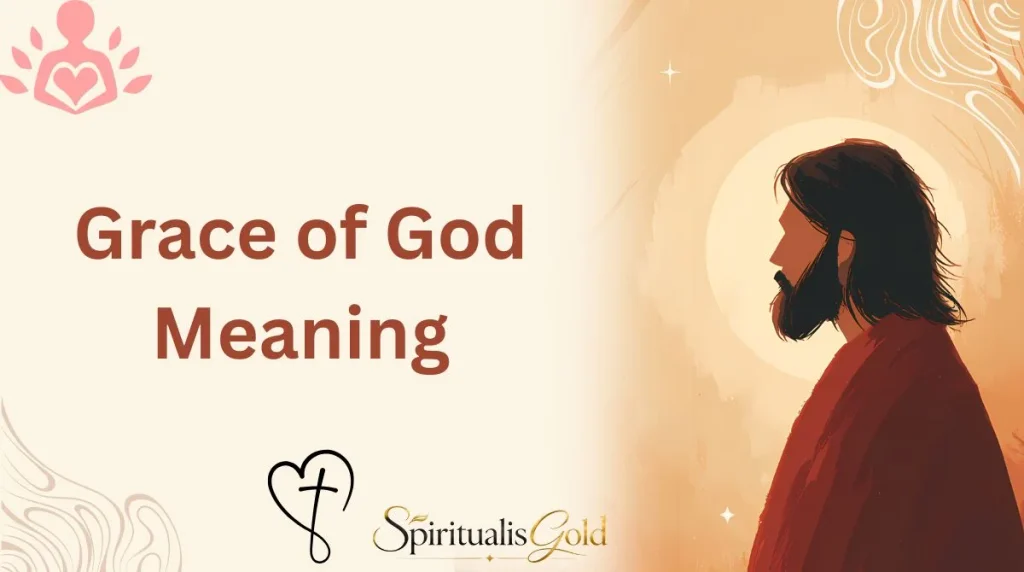
The grace of God means God’s undeserved favor, mercy, generosity, and loving help toward humanity. It is rooted in who God is rather than in the perfection of the person receiving it. Christian Scripture repeatedly presents God as gracious and compassionate.
God’s grace is particularly associated with forgiveness and salvation. Through Jesus Christ, Christians understand grace as God’s invitation to reconciliation with Him. Titus 2:11 says that the grace of God has appeared, bringing salvation and teaching people how to live.
The grace of God does not simply give people permission to continue doing whatever they want. Biblical grace also teaches and transforms. It calls people away from destructive ways of living and toward faith, obedience, love, humility, and righteousness.
For someone experiencing guilt or discouragement, the idea of God’s grace can provide hope. It communicates that human failure does not have to be the final chapter. Grace makes room for repentance, restoration, and a renewed relationship with God.
Fifteen Types of Grace
Grace can be described through several related expressions used in Christian teaching. These categories are helpful for understanding different ways grace is discussed, although the Bible itself does not present one official list of exactly fifteen types.
1. Saving Grace
Saving grace refers to God’s undeserved gift of salvation through faith in Christ. It is central to passages such as Ephesians 2:8–9.
2. Sustaining Grace
Sustaining grace describes God’s strength and support when people face weakness, suffering, or difficult circumstances.
3. Sanctifying Grace
Sanctifying grace refers to God’s continuing work in transforming believers and helping them grow spiritually.
4. Common Grace
Common grace is a theological term describing God’s kindness and providence extended broadly to humanity, including people who do not profess Christian faith.
5. Abundant Grace
Abundant grace emphasizes the overflowing nature of God’s favor and mercy, particularly in relation to human sin.
6. Serving Grace
Serving grace can describe the grace through which believers receive abilities and opportunities to serve others.
7. Giving Grace
Giving grace highlights God’s provision and the generosity that grace can produce in believers.
8. Forgiving Grace
Forgiving grace points to God’s willingness to forgive those who genuinely turn to Him in repentance.
9. Strengthening Grace
Strengthening grace describes God’s help when a person feels spiritually, emotionally, or practically weak.
10. Transforming Grace
Transforming grace emphasizes the way God’s grace changes attitudes, character, priorities, and behavior.
11. Empowering Grace
Empowering grace refers to God’s help that enables believers to carry out responsibilities and live faithfully.
12. Enduring Grace
Enduring grace describes God’s continued faithfulness through changing seasons and prolonged difficulties.
13. Restoring Grace
Restoring grace focuses on God’s mercy in bringing people back after failure, repentance, or spiritual wandering.
14. Relational Grace
Relational grace can describe the way God’s grace shapes relationships by encouraging patience, forgiveness, humility, and love.
15. Growing Grace
Growing grace reflects the continuing journey of becoming more mature in faith. The encouragement in 2 Peter 3:18 to “grow in grace” shows that Christian life involves ongoing spiritual development.
Why These Types of Grace Matter Together
Together, these descriptions show why grace is such a central biblical theme. Grace is not merely a religious word or a comforting idea. It touches salvation, forgiveness, spiritual growth, suffering, service, relationships, and the believer’s understanding of God. At its heart, grace points to the generous character of God and the hope that people can receive what they could never earn on their own.
Frequently Asked Questions
How does Jesus define grace?
Jesus presents grace as God’s undeserved kindness, mercy, and generosity toward people. His teachings show that grace is not something earned through human effort, but a gift that invites forgiveness, transformation, humility, and a renewed relationship with God.
What are the five characteristics of grace?
Grace is unearned, freely given, loving, transformative, and sufficient. It does not depend on human merit, reflects God’s love and mercy, changes the heart, and provides strength to live faithfully even through weakness and difficulty.
What are the 7 levels of grace?
The “seven levels of grace” is not a universally recognized biblical classification. In Christian teaching, grace may be understood through ideas such as saving grace, sustaining grace, sanctifying grace, empowering grace, forgiving grace, serving grace, and persevering grace—different ways God’s grace is understood to work in a believer’s life.
What are the four types of grace?
In Christian theology, grace is often described through categories such as sanctifying grace, actual grace, sacramental grace, and special or charismatic grace. These terms describe different ways God’s grace is understood to strengthen, transform, guide, and equip people for faithful living.
Final Thoughts
At its core, grace is a gift you receive without earning it, and that idea sits at the center of the spiritual meaning of grace in every tradition. Tonight, write down one good thing that came to you unasked, and let yourself say thank you. Repeat it for seven days and watch how your eyes start to catch what was always there. You were never meant to earn every good thing, so give yourself permission to let some of it simply arrive.

Riaz Ahmad is the author of SpiritualisGold.com, sharing meaningful spiritual lines, deep words, life lessons, and inspirational thoughts. With 6+ years of experience creating spiritual and reflective content, he aims to help readers find inner peace, wisdom, hope, and a deeper connection with life.